Drain Cleaning for Kitchen Sink: Step by Step Guide
To clean a kitchen sink drain, clear the strainer, run hot tap water, plunge with the overflow sealed, and snake the trap arm if the clog sits deeper, then test the flow at full volume. That is the whole routine in one sentence. Kitchen sink clogs are usually grease and food film, which cool, harden, and narrow the line a little more with every meal. This guide walks through the steps in order, explains the plunger-then-snake order that works, lists what not to pour, and shows when to stop and call. It is the procedure companion to our causes-focused guide on kitchen grease clogs, so the two together cover both why the line clogs and how to clear it.
Before You Start: What Not to Pour
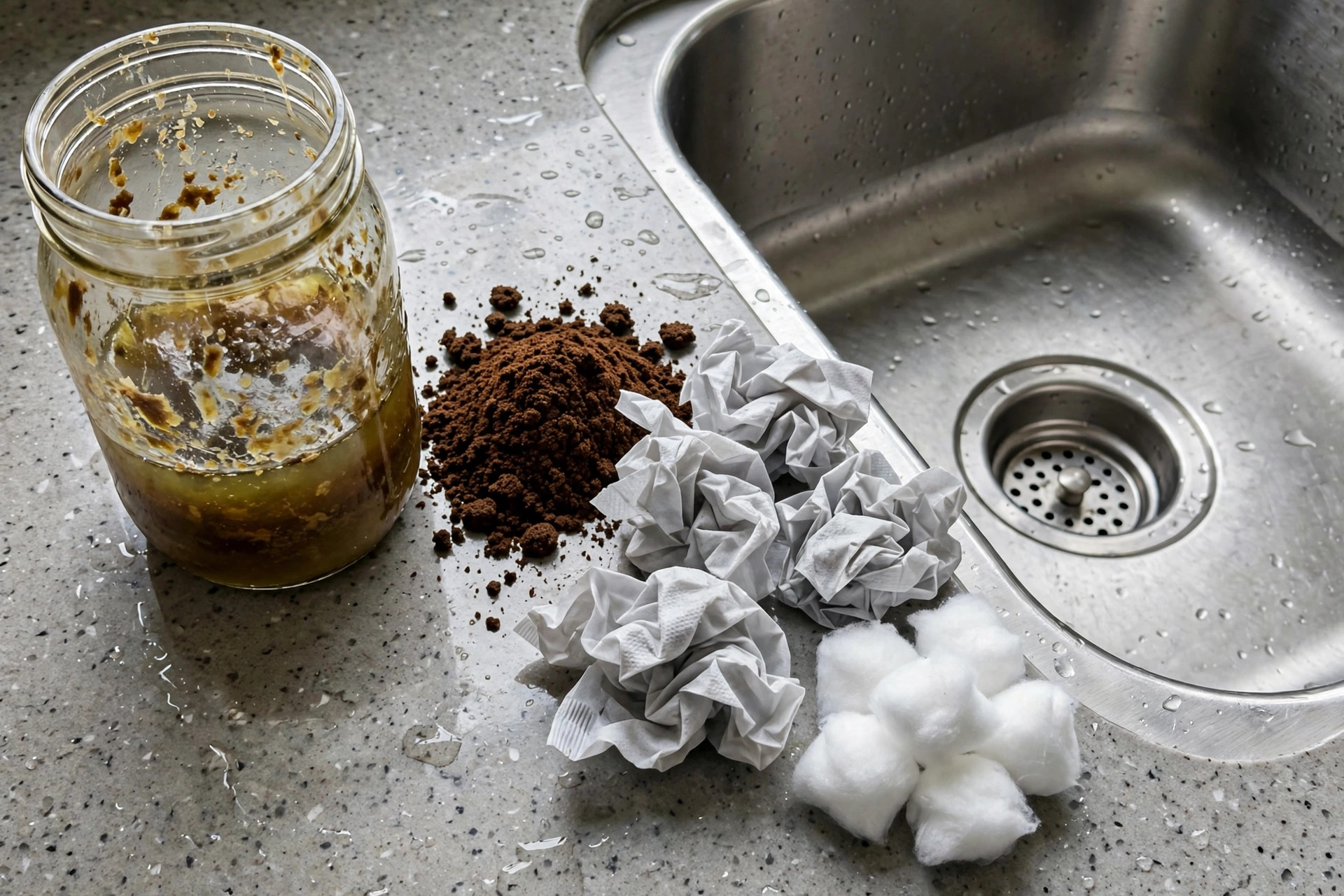
Do not pour harsh chemicals into a kitchen drain. They rarely clear a grease plug, they can harm pipes and seals, and they make later service work hazardous. Do not pour boiling water down the drain either. Boiling water can damage PVC joints and seals, and it pushes softened grease deeper, where it cools and hardens again. Do not pour more grease down the sink to test it, and do not run the dishwasher while the sink is backing up, since the dishwasher drains through the same line and can push dirty water back. Start with the strainer and the steps below. Keep a bucket, towels, and gloves nearby before you begin, since even a simple trap check can spill water.
Step by Step: Clean a Kitchen Sink Drain
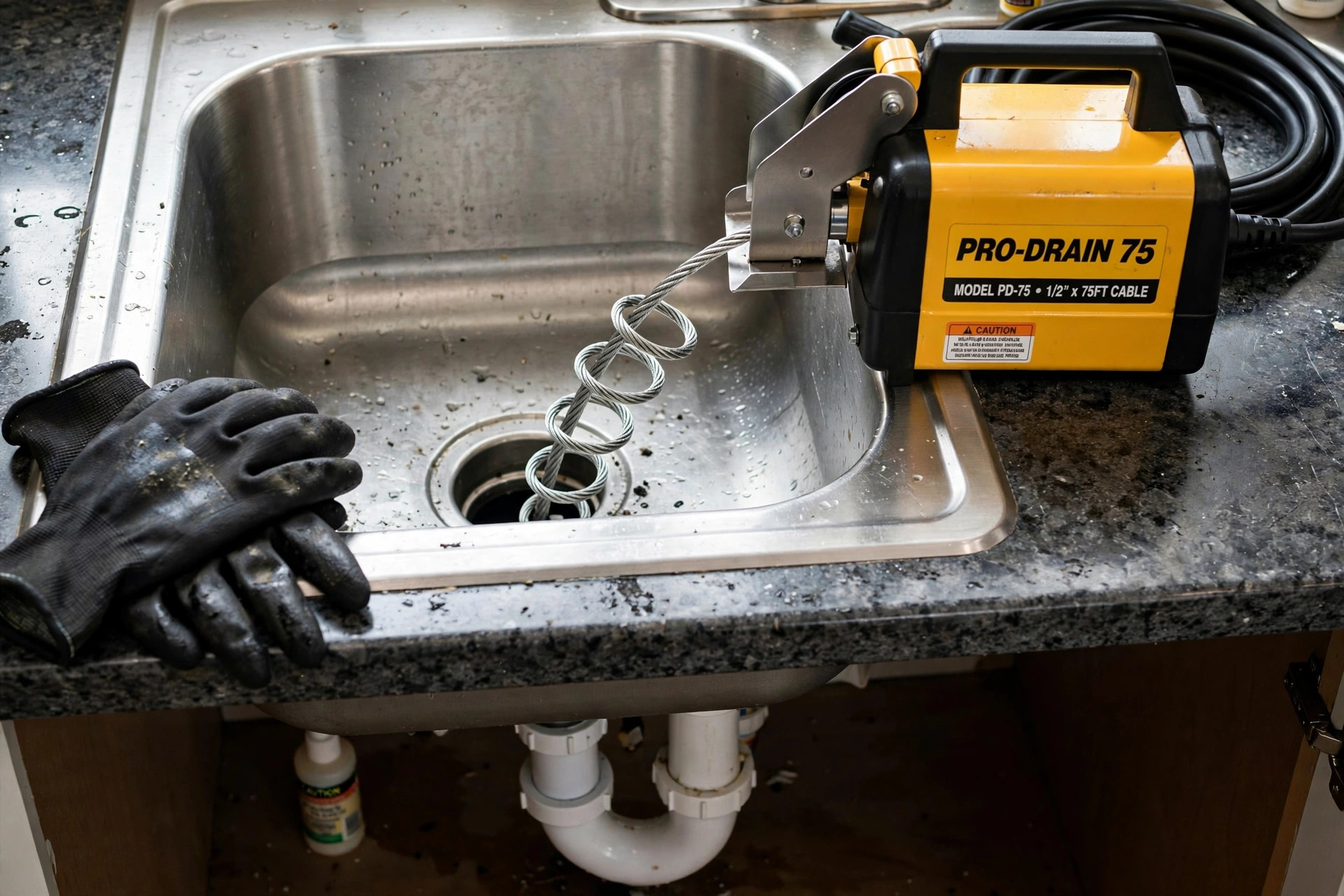
Work through the steps in order and test the flow after each one, so you stop as soon as the drain clears. Clear the strainer and scrape food bits into the trash. Run hot tap water for a minute to move loose film. If the sink still drains slowly, plunge with the overflow sealed, using short, firm plunges. If plunging does not clear it, check the trap: place a bucket below, loosen the slip nuts by hand, and clear any debris inside. If the trap is clear and the drain is still slow, the blockage sits past the trap, and a small hand snake through the trap arm can reach it. The table below lists the steps in order.
Plunger, Then Snake: The Order That Works
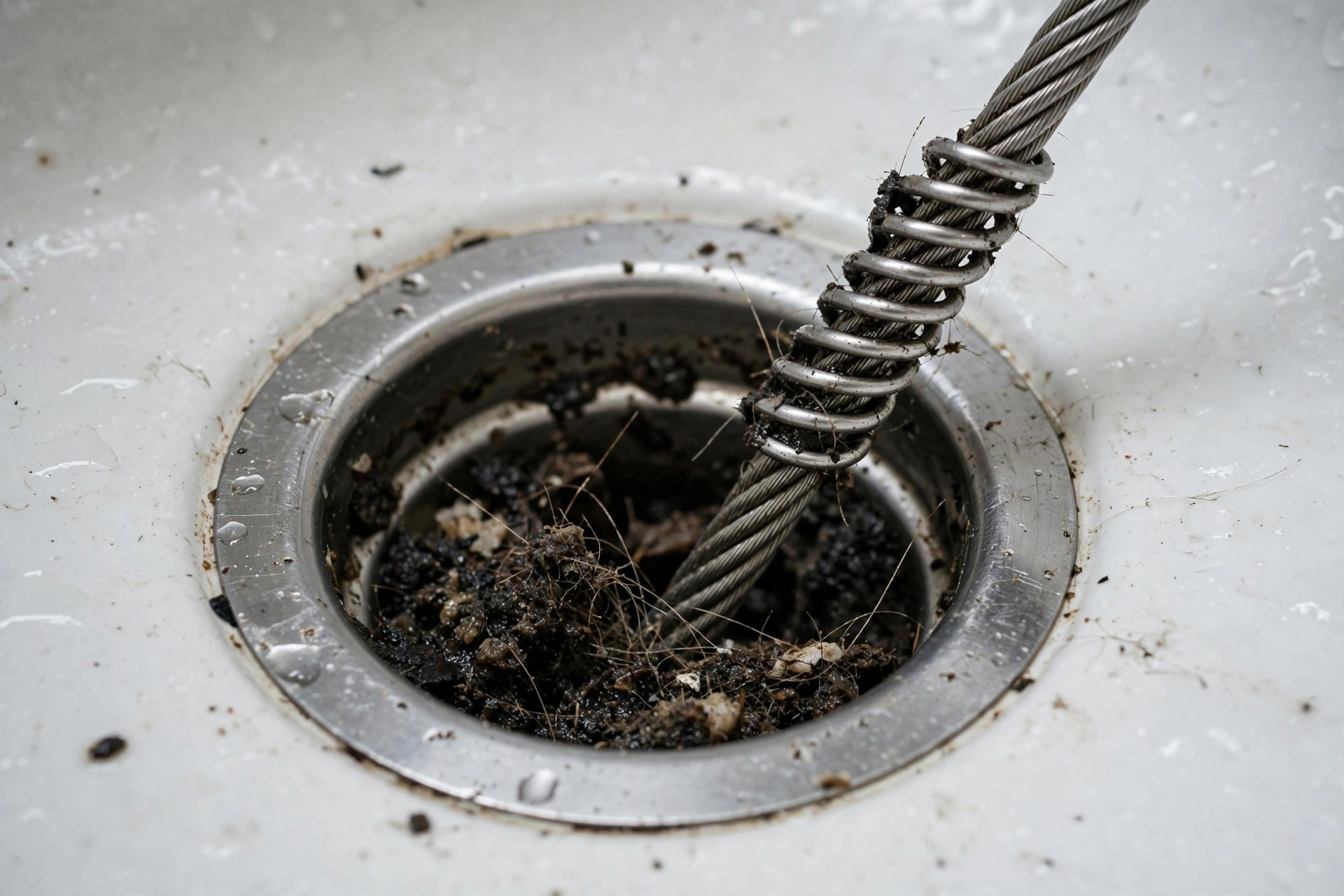
Plunger first, snake second, because each tool reaches a different depth. A plunger moves a soft clog near the trap with pressure, and it is fast and safe for the pipe. A snake reaches past the trap into the trap arm and branch line, where a plunger cannot reach. Using the snake first on a trap clog is wasted effort, and plunging after snaking on a deep clog only pushes water back and forth. For a double-bowl sink, block the second bowl drain with a stopper while you plunge the first, so pressure goes to the clog instead of up the other bowl. If water comes up in the other bowl while you plunge, the clog sits past the point where the two bowls join, and the snake needs to reach that shared section. If the snake meets heavy resistance or grinding, stop, since the line may hold something a home snake should not force.
Grease Habits That Keep It Clear and When to Call
After the drain clears, the habits matter more than the clearing. Wipe greasy pans with a paper towel before washing, and put cooled cooking oil in a sealed jar for the trash. Scrape plates into the trash before rinsing, and use a sink strainer to catch food bits. Run hot tap water for a short burst after washing dishes to move soap and light film along. Call when the drain stays slow after the steps above, when water backs up into the other bowl, when the dishwasher leaves grit on dishes, or when several fixtures slow at once. Those signs point to a blockage deeper in the line or in the main. For help, see our kitchen drain cleaning page, our kitchen grease clogs guide, and our hydro jetting page. We serve 37 Austin ZIP codes, including Downtown 78701. For a check, call Drain Cleaning Austin Pros at (737) 248-8499.
Double-Bowl Sinks and Dishwasher Backups
Double-bowl sinks add a wrinkle to kitchen drain cleaning, because the two bowls share a trap arm and a branch line. When the clog sits past the point where the two bowls join, water from one bowl comes up in the other. Plunging one bowl without blocking the other only pushes water back and forth between the bowls. Block the second bowl drain with a stopper while you plunge the first, so pressure goes to the clog. If water still comes up in the other bowl, the clog sits in the shared section, and the snake needs to reach that shared run, not one bowl. The dishwasher shares the same drain, so a kitchen clog can push dirty water back toward the dishwasher. Grit on dishes, a sour smell in the dishwasher, or water sitting in the dishwasher tub after a cycle can all point to a kitchen line clog rather than a dishwasher fault. Check the dishwasher drain hose loop as well: the hose should rise to the underside of the counter before dropping to the drain, since that high loop stops dirty water from flowing back. If the sink backs up into the dishwasher, stop running the dishwasher until the line is clear, since each cycle adds water to a line that cannot drain. A technician checks both bowls and the dishwasher drain on every kitchen visit, and tests the whole run at full volume before leaving. That full-run test is what separates a cleared drain from a drain that clogs again next week.
Drain Cleaning for Kitchen Sink: Step by Step Guide FAQs
Common questions on this topic.
How do I clean a kitchen sink drain?
Clear the strainer, run hot tap water, plunge with the overflow sealed, check the trap, and snake the trap arm if the clog sits deeper. Test the flow at full volume after each step, and stop as soon as the drain clears.
Why does my kitchen sink keep clogging?
Grease and food film narrow the line over time. Hot grease cools and hardens inside the pipe, then catches food bits until the opening shrinks. Wiping pans and keeping oil out of the sink stops most repeat clogs.
Should I use boiling water on a kitchen drain?
No. Boiling water can damage PVC joints and seals, and it pushes softened grease deeper, where it cools and hardens again. Use hot tap water instead, and clear the line properly for a lasting fix.
When should I call for kitchen drain cleaning?
Call when the drain stays slow after the steps above, when water backs up into the other bowl, when the dishwasher leaves grit on dishes, or when several fixtures slow at once. Those signs point to a deeper blockage.
Related Drain Cleaning Services
Need a hand? These are the jobs we do every day.
More drain cleaning services
Drain acting up right now?
Call for same-day drain cleaning in Austin, Mon-Sat.
Call Us to Book a Visit
Calls are the way to book. Tell us what your drains are doing and we will set up the next open slot.