Kitchen Drain Cleaning in Austin, TX
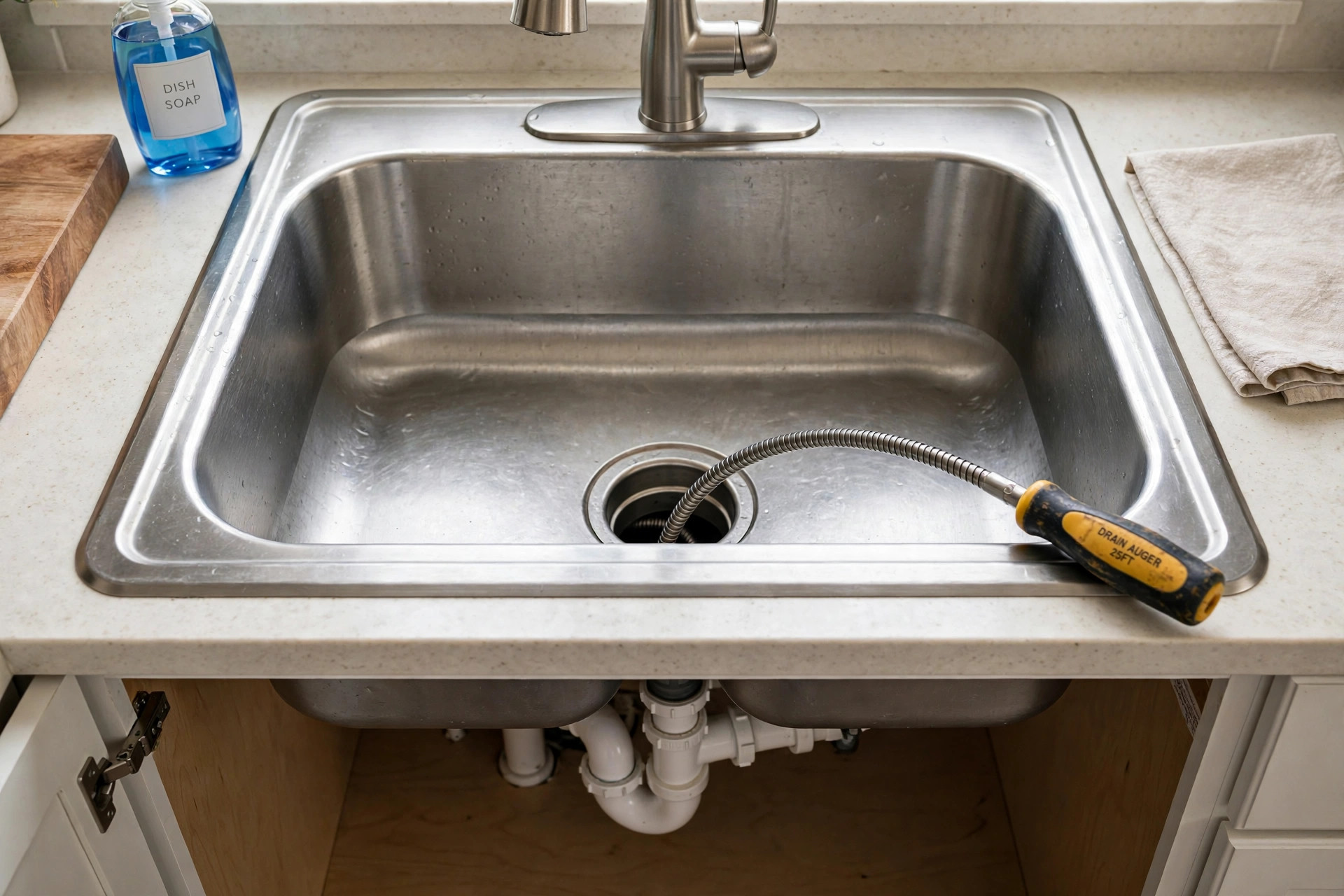
The kitchen drain works harder than any other drain in the home, and it shows. Every pan of bacon, every pot of pasta water, and every rinsed plate sends a little more grease, starch, and food film down the line. Hot water carries grease away, but it cools and hardens a few feet down the pipe, where it clings to the wall and catches everything that follows. Over months the opening narrows, drainage slows, and the sink starts to gurgle or back up into the other basin. Kitchen drain cleaning in Austin has a local wrinkle: hard water scale gives grease something to grip, and older homes with cast iron lines narrow faster than newer PVC runs. Our technicians clear the line, check the flow at the sink and the dishwasher connection, and explain what they found in plain words.
Grease: The Slow Kitchen Clog
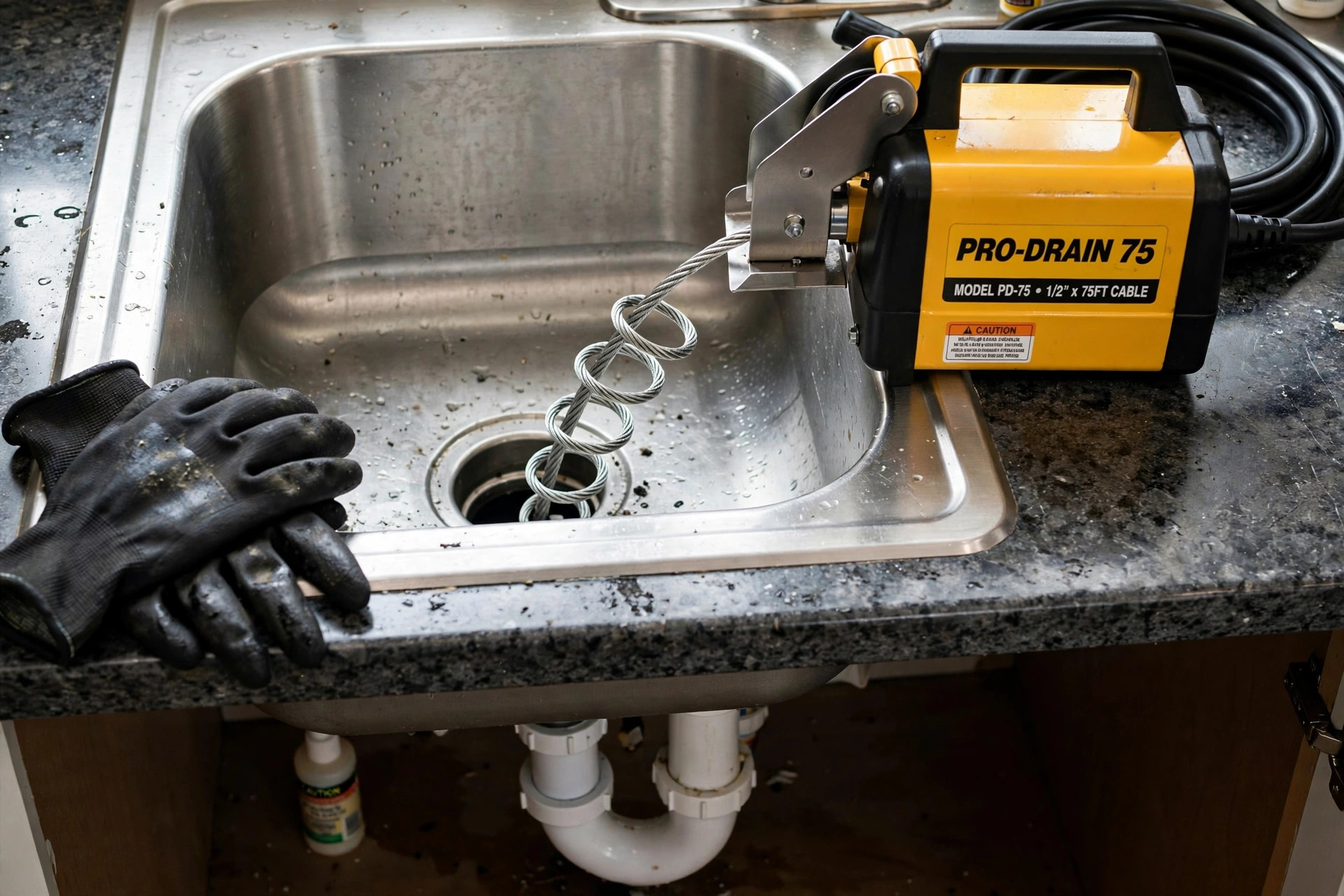
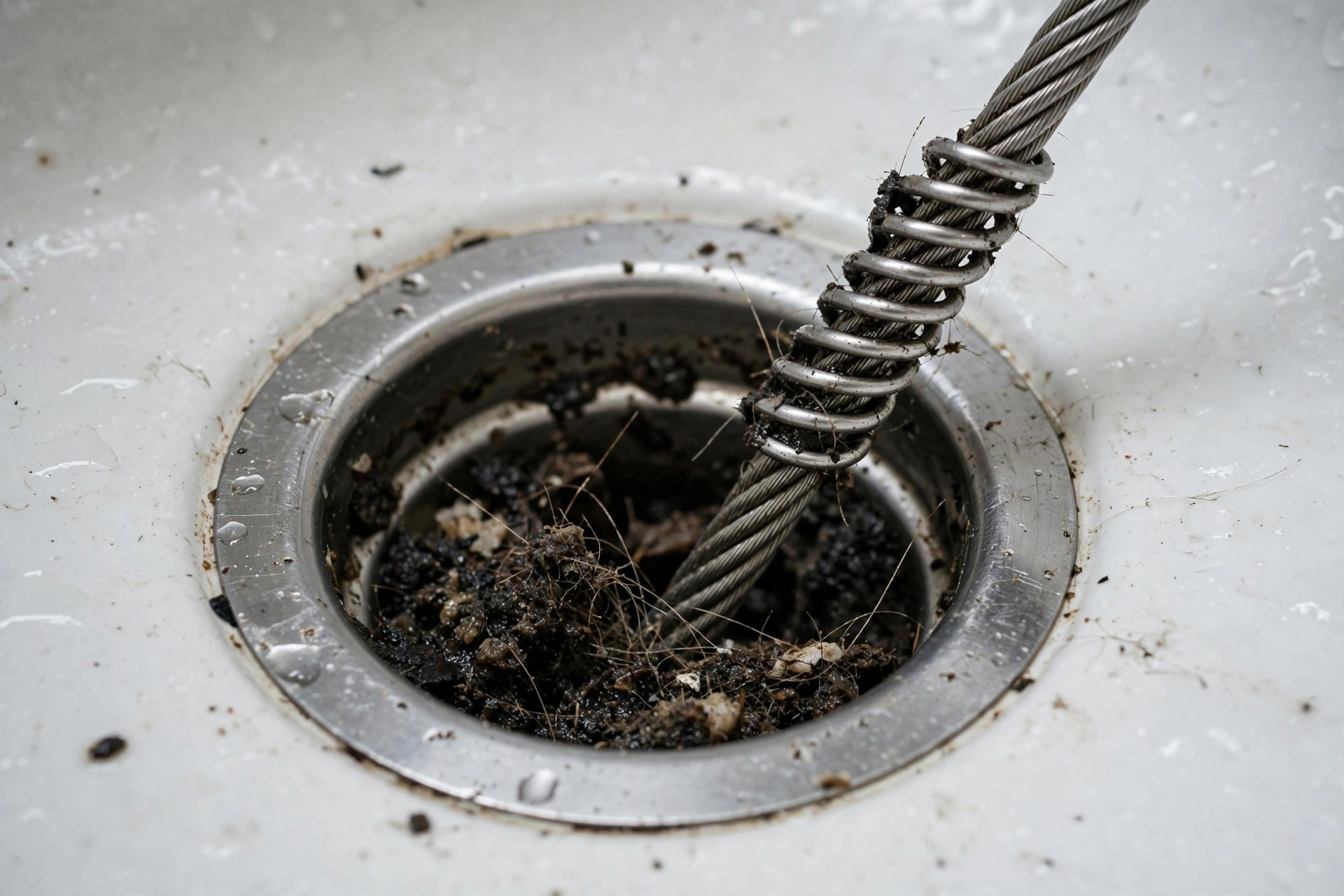
Grease is the number one cause of slow kitchen drains, and it works slowly enough that most people do not notice until the sink barely drains. Liquid grease poured down the sink cools inside the pipe and turns waxy. That wax layer catches food particles, coffee grounds, and soap film, and the buildup grows a little with every meal. A plunger may push water through for a day, but it does not remove the coating, so the drain slows again within a week. We clear grease buildup with the right tool for the line: a cable that cuts through the blockage, or hydro jetting that scours the whole pipe wall when the coating runs deep. After clearing, we run water at full flow and watch the drain, so the fix is verified before we leave. The habit that prevents the next one is simple: wipe pans with a paper towel and put grease in the trash, not the sink.
Double-Bowl Sinks and Backups
In a double-bowl sink, water coming up in the other basin is a classic sign of a clog past the point where the two bowls join. The blockage sits in the shared trap arm or the branch line, so water from one side has nowhere to go but up the other. A plunger used on one side often just pushes water back and forth between the bowls. We check both bowls, the trap, and the shared arm, then clear the blockage at its real location. We also check the dishwasher connection, because a kitchen clog can push dirty water back toward the dishwasher. If your dishwasher smells like sink water or leaves grit on dishes, the shared drain is part of the problem. Clearing the line and testing both bowls plus the dishwasher drain confirms the whole run is open.
What a Kitchen Visit Looks Like
A kitchen drain visit starts with questions: how long the drain has been slow, whether both bowls are affected, and whether the dishwasher is involved. The technician then checks the flow at the sink, inspects the trap and the visible connections, and chooses the tool that fits the blockage. A trap clog clears quickly by hand. A deeper blockage gets a cable run through the cleanout or the trap arm. Grease coating the full line may call for hydro jetting, which scours the pipe wall back to full diameter. Every visit ends the same way: full-flow water tests at the sink and a check of the dishwasher drain. We explain what we found, what we cleared, and the one or two habits that keep the line open, then leave the cabinet tidy.
Keeping Kitchen Drains Clear
A few habits keep kitchen drains clear for years. Scrape plates into the trash before rinsing, and never pour grease, oil, or coffee grounds down the sink. Run cold water for several seconds after using the sink, so food particles flush fully into the main line instead of settling in the trap. A sink strainer catches the bits that would otherwise bind with grease in the line. Avoid putting fibrous scraps like celery strings, onion skins, and potato peels down the drain in quantity, since they tangle and trap other waste. Once a month, fill the sink with hot tap water and release it all at once, which flushes the trap and the near line. If the drain slows again despite these habits, the buildup is deeper in the line, and a visit clears it before it becomes a backup.
Kitchen Drain Cleaning FAQs
Common questions about kitchen drain cleaning in Austin.
Why does my kitchen sink drain so slowly?
Grease and food film narrow the line over time. Hot grease cools and hardens inside the pipe, then catches food particles until the opening shrinks. A plunger may open a path for a day, but only clearing the buildup restores full flow.
Water comes up in the other bowl of my double sink. Why?
The clog sits past the point where the two bowls join, in the shared trap arm or branch line. Water from one side has nowhere to go but up the other bowl. Clearing the shared section, not one bowl, fixes it.
Should I pour boiling water down a greasy drain?
Boiling water can soften surface grease near the sink, but it rarely clears a deep buildup, and it can damage PVC joints and seals. It also pushes softened grease deeper, where it cools and hardens again. Clearing the line properly is the lasting fix.
Do I need hydro jetting for a kitchen clog?
Not always. A single clog in the trap or near line clears with a cable. Jetting is the right call when grease coats a long section of pipe, or when the same line clogs again soon after a cable clearing.
Can a kitchen clog affect the dishwasher?
Yes. The dishwasher drains through the same line, so a kitchen clog can push dirty water back toward the dishwasher and leave grit on dishes. We check the dishwasher drain on every kitchen visit.
What is the best way to clean a kitchen sink drain?
Clear the strainer, run hot tap water, plunge with the overflow sealed, check the trap, and snake the trap arm if the clog sits deeper. Test the flow at full volume after each step.
Does baking soda and vinegar clear a kitchen drain?
It can loosen a thin film of soap near the opening, but it will not clear a real clog. Hair mats, grease plugs, and deeper blockages need a mechanical clearing. One try followed by a hot tap water flush is enough to tell.
How do I keep grease out of my kitchen drain?
Wipe greasy pans with a paper towel before washing, pour cooled cooking oil into a sealed jar for the trash, scrape plates into the trash, and use a sink strainer. These habits stop most kitchen clogs before they start.
Related Drain Cleaning Services
More ways we keep Austin drains flowing.
More drain cleaning services
Ready for Kitchen Drain Cleaning in Austin, TX?
Call now for kitchen drain cleaning in Austin. Same-day appointments, Mon-Sat.
Call Us to Book a Visit
Calls are the way to book. Tell us what your drains are doing and we will set up the next open slot.