Drain Camera Inspection in Austin, TX
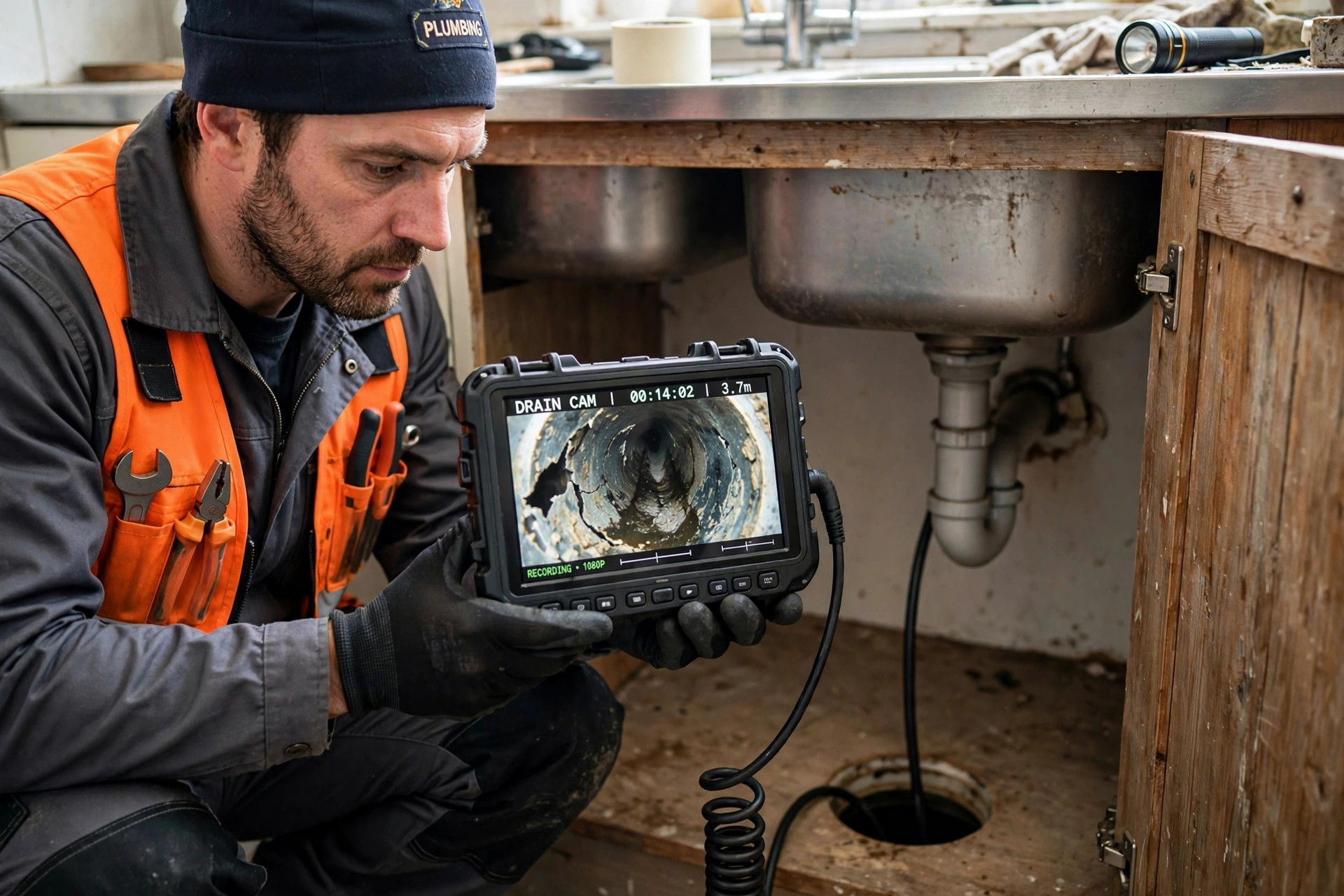
Some drain problems answer to a cable and never come back. Others return in the same spot weeks later, and each clearing treats a symptom while the cause stays hidden in the pipe. Drain camera inspection in Austin ends the guessing: a small waterproof camera travels down the line and shows the inside of the pipe on a screen, in real time. Roots, grease, scale, broken sections, bellied pipe, and misaligned joints all look different on camera, and each one calls for a different fix. Our technicians use camera inspections on repeat clogs, main line problems, and any line where the cause is not obvious, so the clearing that follows is the right one.
How a Camera Inspection Works
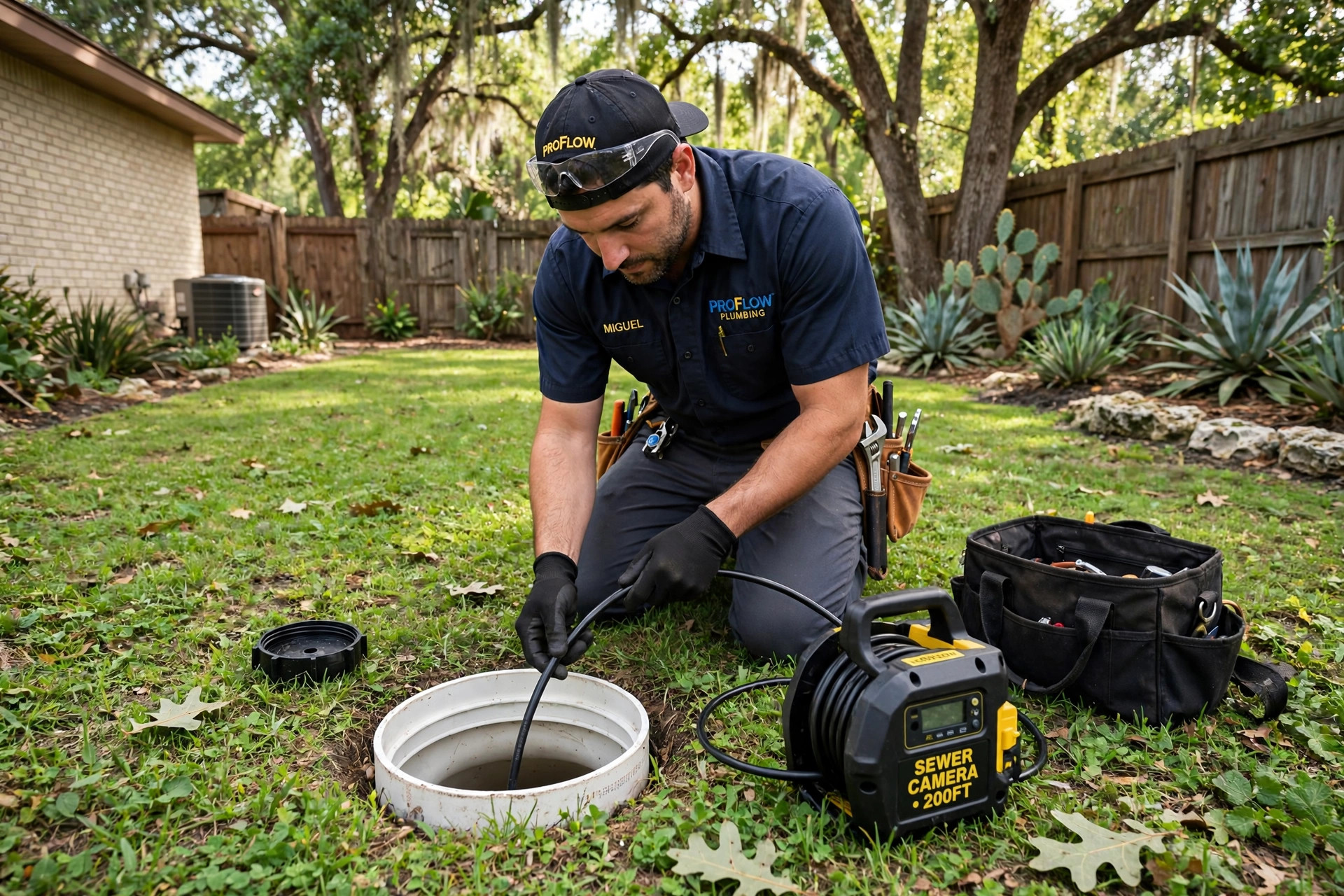
A camera inspection starts at an accessible cleanout or fixture. The technician feeds a flexible rod with a camera head into the line, watching the live picture on a monitor. The picture shows the pipe wall, joints, and any obstruction, and a locator above ground marks the spot that matches what the camera sees. The technician narrates as the camera travels: here is a root mass, here is grease coating, here is a joint that shifted. The whole process is non-invasive, since the camera enters through an existing opening and no digging is needed to look. After the inspection, you see the same picture the technician saw, and the next step is explained against what is on screen, not against a guess.
What the Camera Finds
The camera finds the causes that clearing alone cannot. Root intrusion looks like fine white tendrils entering through a joint, growing into a mass that catches paper and waste. Grease shows as a yellow-brown coating narrowing the pipe. Scale appears as rough crust on cast iron walls. A bellied section shows water pooling where the pipe sags. A broken section shows a cracked wall or a joint that shifted out of line. Each finding points to a different fix: roots call for cutting and then a plan for the joint, grease calls for jetting, and a break calls for repair. Without the camera, all of these look identical from above ground: a slow drain.
When an Inspection Is Worth It
A camera inspection is worth it whenever a clog returns in the same spot, whenever several fixtures back up together, and whenever a home is being bought or renovated. Repeat clogs in one spot almost always have a cause inside the pipe that clearing cannot remove. Several fixtures backing up at once suggests a main line problem, and the camera shows whether it is roots, grease, or damage. For a home purchase, an inspection of the sewer lateral reveals problems that no walkthrough can show, and the picture is worth more than any verbal report. After any clearing that involved roots or a suspected break, a follow-up inspection confirms the line is truly open.
After the Inspection: Next Steps
After the inspection, the technician explains the picture and the options in plain words. A root mass that has been cut gets a plan for the joint it entered through. A grease-coated line gets jetting to scour the wall. A broken or bellied section gets a repair discussion, including what the repair involves and what happens if it waits. Nothing is cleared on the spot without your understanding of what the camera found, because the picture changes the plan. We leave you with a clear description of the line condition and the recommended next step, so any decision you make is based on what is actually in the pipe.
Snaking vs Hydro Jetting vs Camera: Which Method Fits
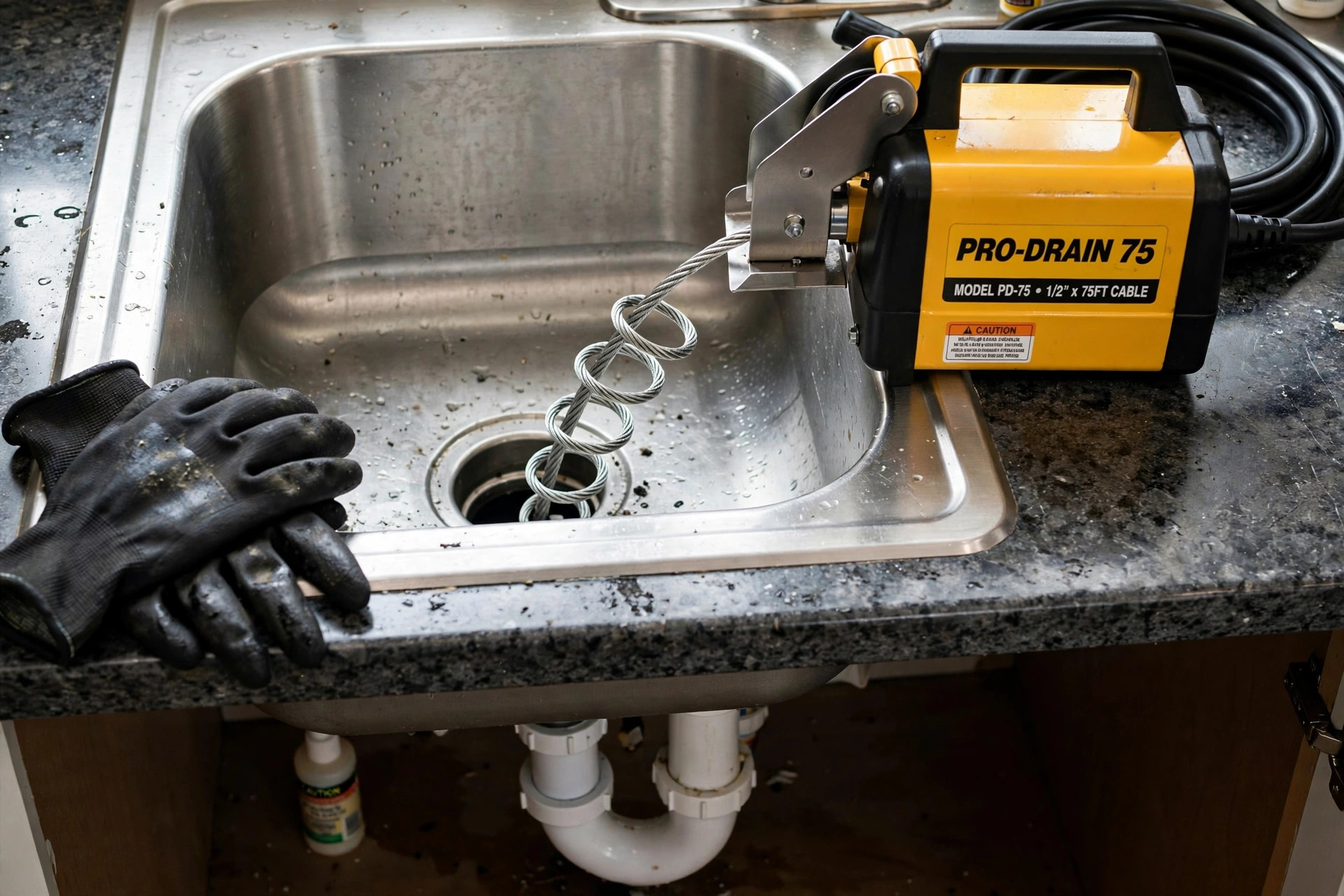
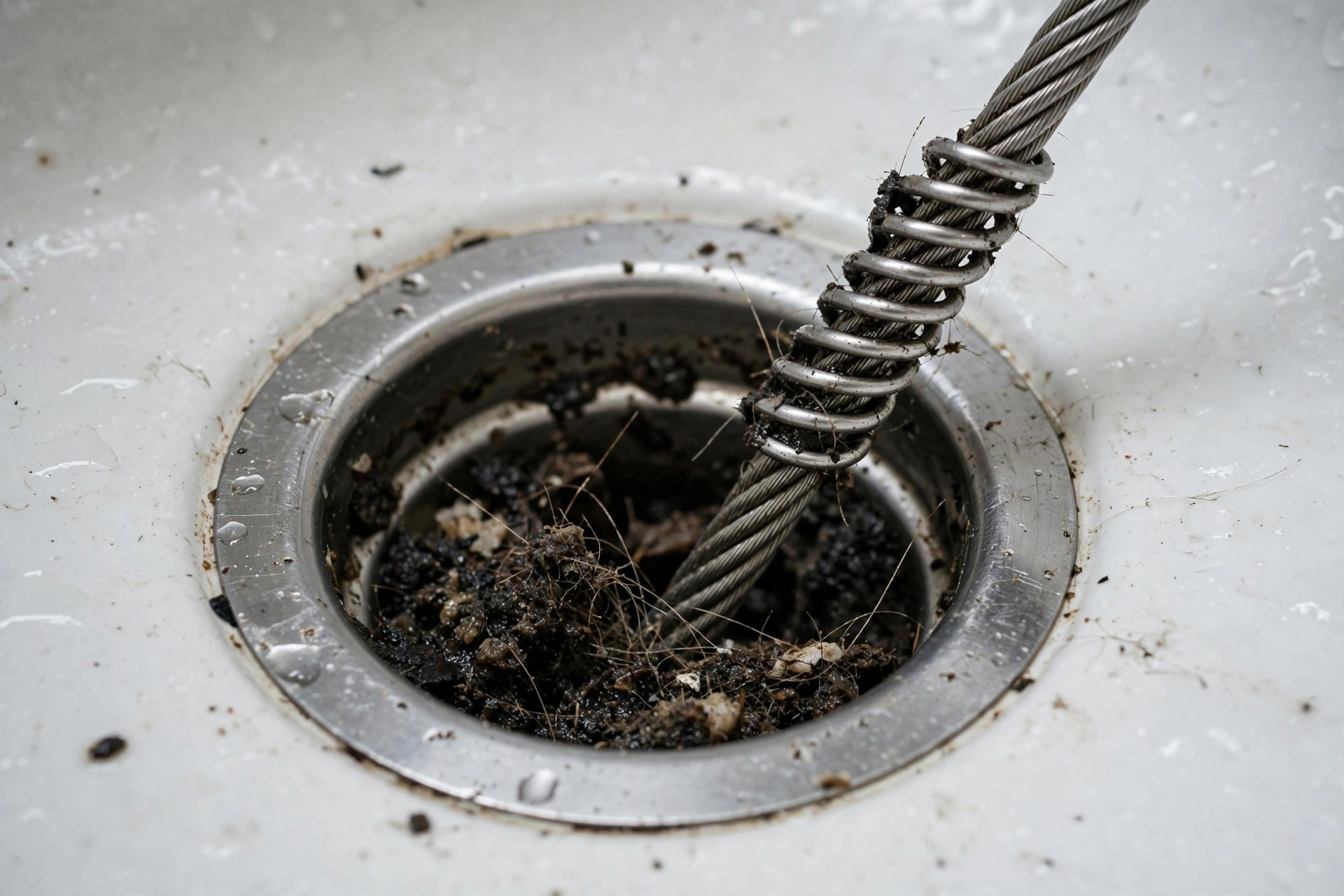
A camera inspection is the diagnostic method, and it answers the question the clearing tools cannot: what is actually inside this pipe? A cable snake breaks through a blockage and pulls debris back out. Hydro jetting scours the whole pipe wall with high-pressure water. The camera shows roots, grease, scale, breaks, and bellies on a screen, so the clearing that follows matches the real problem. The table below puts the three side by side. On a repeat clog, the camera often prevents a clearing method that would not have worked.
When to Call for a Camera Inspection
Call for a camera inspection when a clog returns in the same spot, when several fixtures back up together, or when a home is being bought or renovated. Repeat clogs in one spot almost always have a cause inside the pipe that clearing cannot remove. Several fixtures backing up at once suggests a main line problem, and the camera shows whether it is roots, grease, or damage. After any clearing that involved roots or a suspected break, a follow-up inspection confirms the line is truly open. Same-day visits run Mon-Sat across 37 Austin ZIP codes.
Drain Camera Inspection FAQs
Common questions about drain camera inspection in Austin.
How long does a camera inspection take?
Most inspections of a single line take under an hour, including setup, the camera run, and the explanation. Longer laterals and lines with several problem spots take longer, since the technician documents each one.
Will the camera damage my pipes?
No. The camera head is small and smooth, and it travels through existing openings. It is a look, not a tool that cuts or scrapes, so it cannot damage a sound pipe.
Can I watch the inspection?
Yes, and we encourage it. You see the same live picture the technician sees, with narration as the camera travels. The picture makes the next step obvious in a way words alone cannot.
Does every clog need a camera inspection?
No. A simple trap clog that clears once and stays clear does not need one. Inspections are for repeat clogs, main line problems, and cases where the cause is not obvious from above ground.
What if the camera finds a broken pipe?
The technician shows you the break on screen, marks its location, and explains the repair options in plain words. You decide the next step with the picture in front of you.
What is a drain camera inspection?
A drain camera inspection sends a small waterproof camera down the line and shows the inside of the pipe on a screen, in real time. Roots, grease, scale, breaks, and bellies all look different on camera, and each one calls for a different fix.
How does a drain camera inspection work?
The technician feeds a flexible rod with a camera head into the line through a cleanout or fixture, watching the live picture on a monitor. A locator above ground marks the spot that matches what the camera sees.
Does a camera inspection find the cause of repeat clogs?
Yes, that is its main job. A repeat clog in the same spot almost always has a cause inside the pipe that clearing cannot remove. The camera shows whether it is roots, grease, scale, or damage.
Related Drain Cleaning Services
More ways we keep Austin drains flowing.
More drain cleaning services
Ready for Drain Camera Inspection in Austin, TX?
Call now for drain camera inspection in Austin. Same-day appointments, Mon-Sat.
Call Us to Book a Visit
Calls are the way to book. Tell us what your drains are doing and we will set up the next open slot.