What Plumbers Use to Unclog Drains: Tools Explained
Plumbers unclog drains with a small set of tools, used in order from simplest to strongest: a plunger, a hand snake, a drum machine, a camera, and a hydro jet. The choice depends on where the clog sits, what it is made of, and what shape the pipe is in. A plunger moves a soft clog near a fixture. A hand snake reaches a clog a few feet into the line. A drum machine drives a longer cable through branch and main lines. A camera shows what is inside the pipe. A hydro jet scours the whole pipe wall clean. This guide explains each tool, what it is for, and how a technician picks the right one. No brand names are needed: the tool type, not the label, is what clears the drain.
The Tools, From Simplest to Strongest
A technician starts with the gentlest tool that can do the job and steps up only when the clog demands it. That order protects the pipe. A plunger on a trap clog is fast and safe. A hand snake on a branch clog reaches past the trap without disturbing the fixture. A drum machine on a main line clog brings the reach and power a hand snake lacks. A camera answers the question the clearing tools cannot: what is actually inside this pipe? Jetting is the strongest cleaning tool, and it comes last, after the pipe has been shown to be sound. The table below lists the five tools in the order a technician reaches for them.
Plunger and Hand Snake: First Steps
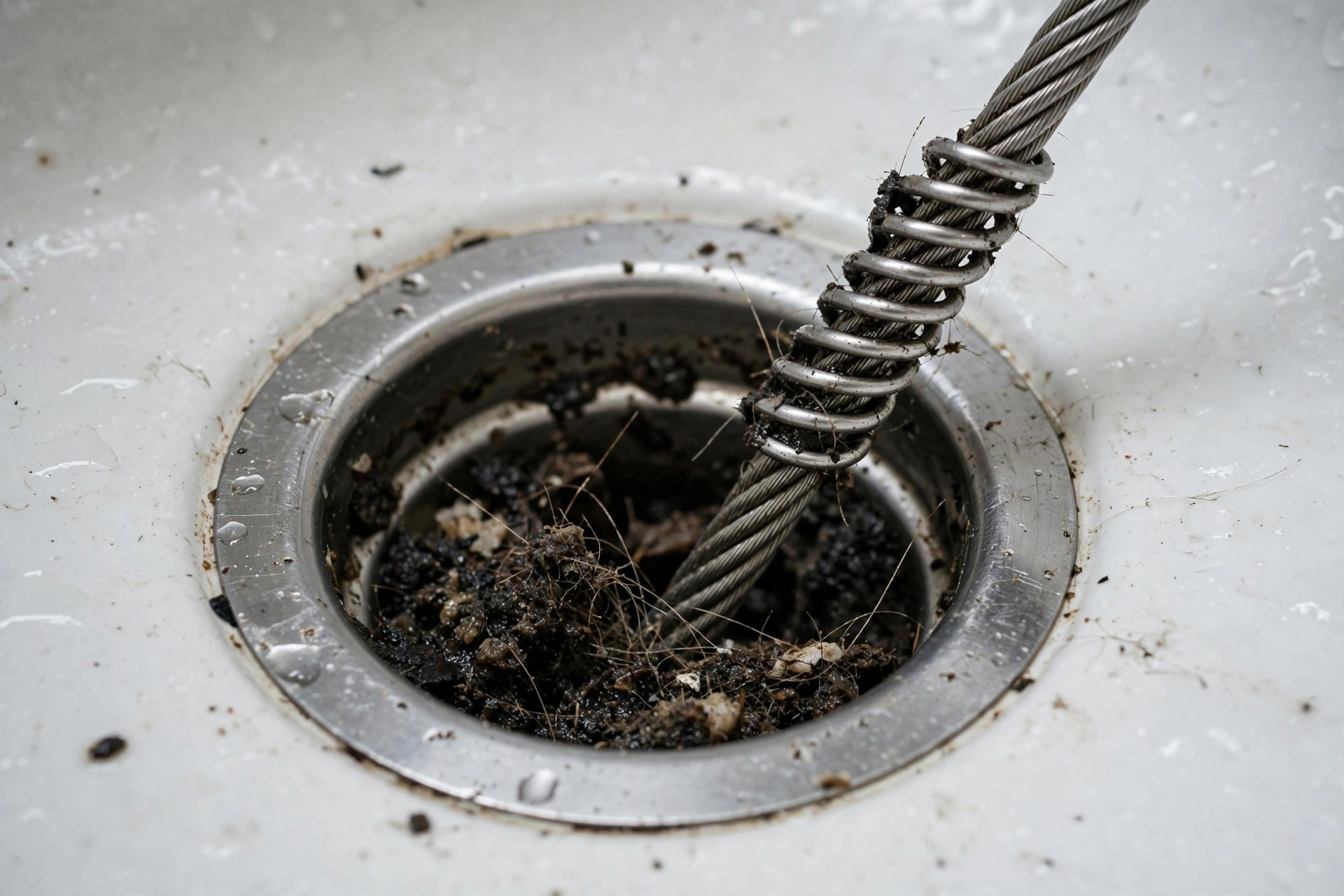
A plunger works by pressure, not by force. The cup seals over the drain, and short, firm plunges push water against the clog and pull it back. For a sink or tub, sealing the overflow with a wet rag keeps the pressure on the clog instead of letting it escape through the overflow. A hand snake, also called a hand auger, is a short cable with a handle and a tip that breaks through or hooks debris. The technician feeds it past the trap, turns the handle to work the tip through the blockage, and pulls debris back out. Both tools suit soft, local clogs: hair in a shower trap, soap in a sink trap, or paper in a toilet. If the clog sits deeper or returns fast, the next tools come out.
Drum Machine and Camera: For Deeper Clogs
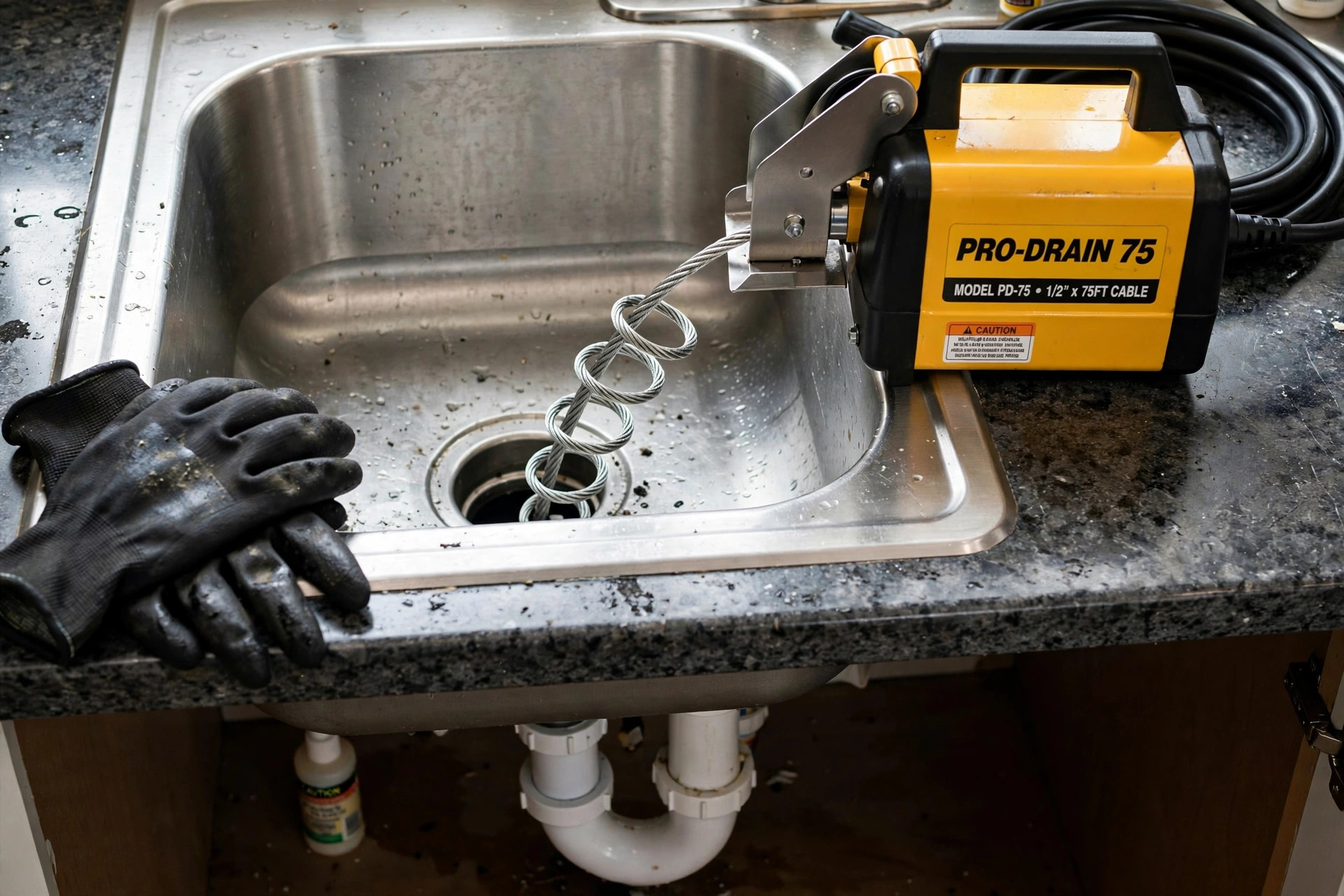
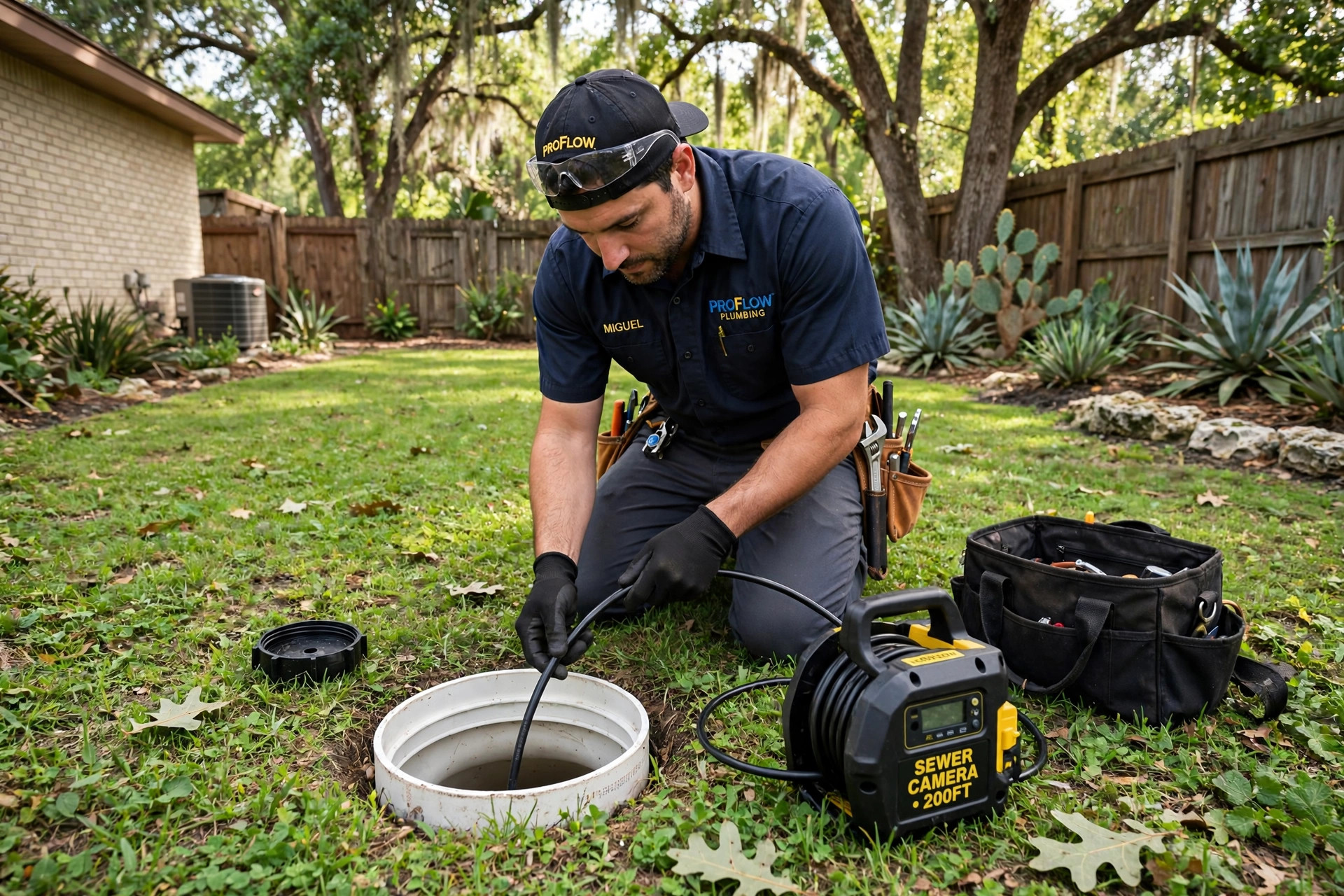
A drum machine holds a long steel cable wound inside a drum, with a motor that turns the cable as it feeds into the line. The length and power let it reach clogs far past the trap, including main line blockages and root mats. The technician picks the cable size and tip for the pipe, since a cable that is too stiff for a small line can harm the pipe. A camera is the diagnostic tool. A small waterproof camera travels the line and shows roots, grease, scale, breaks, and bellies on a screen. It does not clear anything by itself, but it tells the technician which clearing tool fits and whether the pipe is sound. On a repeat clog, the camera often pays for itself by preventing a clearing method that would not have worked.
Hydro Jetting: For Coated Lines
Hydro jetting is the deep-cleaning tool. A hose with a special nozzle sprays water in several directions at high pressure, cutting grease, soap scum, scale, and sludge off the pipe wall and carrying debris out to the main sewer. It fits lines where buildup coats a long stretch of pipe, such as a grease-heavy kitchen line or a sludge-lined main. It is not the first tool for a simple clog, and it is not used on a pipe that may be cracked or weak until a camera has shown the line is sound. In Austin, jetting is common on lines with hard water scale and grease, and on main lines where oak roots have formed mats. For more detail, see our hydro jetting page, our drain camera inspection page, and our drain cleaning page. We serve 37 Austin ZIP codes, including Downtown 78703. For help, call Drain Cleaning Austin Pros at (737) 248-8499.
How a Technician Picks the Tool on Arrival
A technician picks the tool by diagnosis, not by habit. The visit starts with questions: which fixtures are slow, when the trouble started, whether the clog returns, and whether other fixtures react when one drains. Then comes the fixture check: run water, listen for gurgling, watch how fast each drain moves. That pattern narrows the search. One slow fixture points to a local clog, and the technician starts with a plunger or a hand snake. Several fixtures slowing together point to a shared or main line, and the technician reaches for a drum machine or a camera. A clog that returns in the same spot points to buildup or damage inside the pipe, and the camera comes out before any clearing tool. The technician also weighs the pipe. An older clay lateral, a cast iron line with heavy scale, or a line of unknown age gets a camera first, since the clearing tool must match a pipe that may be weak. Once the picture is clear, the choice is plain: cable for a soft local clog, jetting for a coated line, repair talk for a break. The technician explains the choice before starting, so you know why this tool and not another. That explanation is part of the service. A tool picked by diagnosis clears the drain once. A tool picked by guesswork clears it until next month.
What Plumbers Use to Unclog Drains: Tools Explained FAQs
Common questions on this topic.
What tool do plumbers use to unclog drains?
Plumbers use a plunger, a hand snake, a drum machine, a camera, and a hydro jet, in order from simplest to strongest. The choice depends on where the clog sits, what it is made of, and what shape the pipe is in.
Do plumbers use a camera for every clog?
No. A simple trap clog that clears once does not need one. Cameras are for repeat clogs, main line problems, and cases where the cause is not clear from above ground.
What is a drum machine?
A drum machine holds a long steel cable wound inside a drum, with a motor that turns the cable as it feeds into the line. Its length and power let it reach clogs far past the trap, including main line blockages and root mats.
When do plumbers use hydro jetting?
Jetting is used when buildup coats a long stretch of pipe, such as grease in a kitchen line or sludge in a main line. It comes after a camera check when the pipe may be cracked or weak.
Related Drain Cleaning Services
Need a hand? These are the jobs we do every day.
More drain cleaning services
Drain acting up right now?
Call for same-day drain cleaning in Austin, Mon-Sat.
Call Us to Book a Visit
Calls are the way to book. Tell us what your drains are doing and we will set up the next open slot.