What Is Drain Cleaning? Cleaning vs Clearing vs Repair
Drain cleaning is the work of opening a slow or blocked drain and restoring full flow. A technician finds where the blockage sits, picks the tool that fits the pipe and the problem, clears the line, and tests nearby fixtures to prove the flow is back. That is the whole job in one sentence. The details matter, though, because three words that sound alike, cleaning, clearing, and repair, mean three different jobs, and the right one depends on what is inside the pipe. Clearing opens a path through a blockage. Cleaning scours the pipe wall so buildup has less to grip. Repair fixes a broken, bellied, or shifted section of pipe. In Austin homes, hard water scale, kitchen grease, hair, soap scum, and live oak roots all create different kinds of buildup, so the method that clears one clog may leave another untouched. This guide explains each term, the methods behind them, and how to tell which job your drain needs.
Drain Cleaning vs Clearing vs Repair
Clearing is the lightest job. A cable or plunger opens a hole through the blockage so water can move again. It is fast and it suits a soft, local clog, such as hair in a shower trap or paper in a toilet. Cleaning goes further. It removes the layer on the pipe wall, grease, soap scum, scale, and sludge, so the pipe returns to near its full opening and the clog has less to grip next time. Hydro jetting is the classic cleaning method. Repair is different from both. It fixes pipe damage, such as a crack, a break, a sag where water pools, or a joint that shifted out of line. No amount of clearing or cleaning fixes a broken pipe, which is why a camera look matters when clogs keep coming back in the same spot. The table below sums up the three jobs.
Methods Used in Drain Cleaning
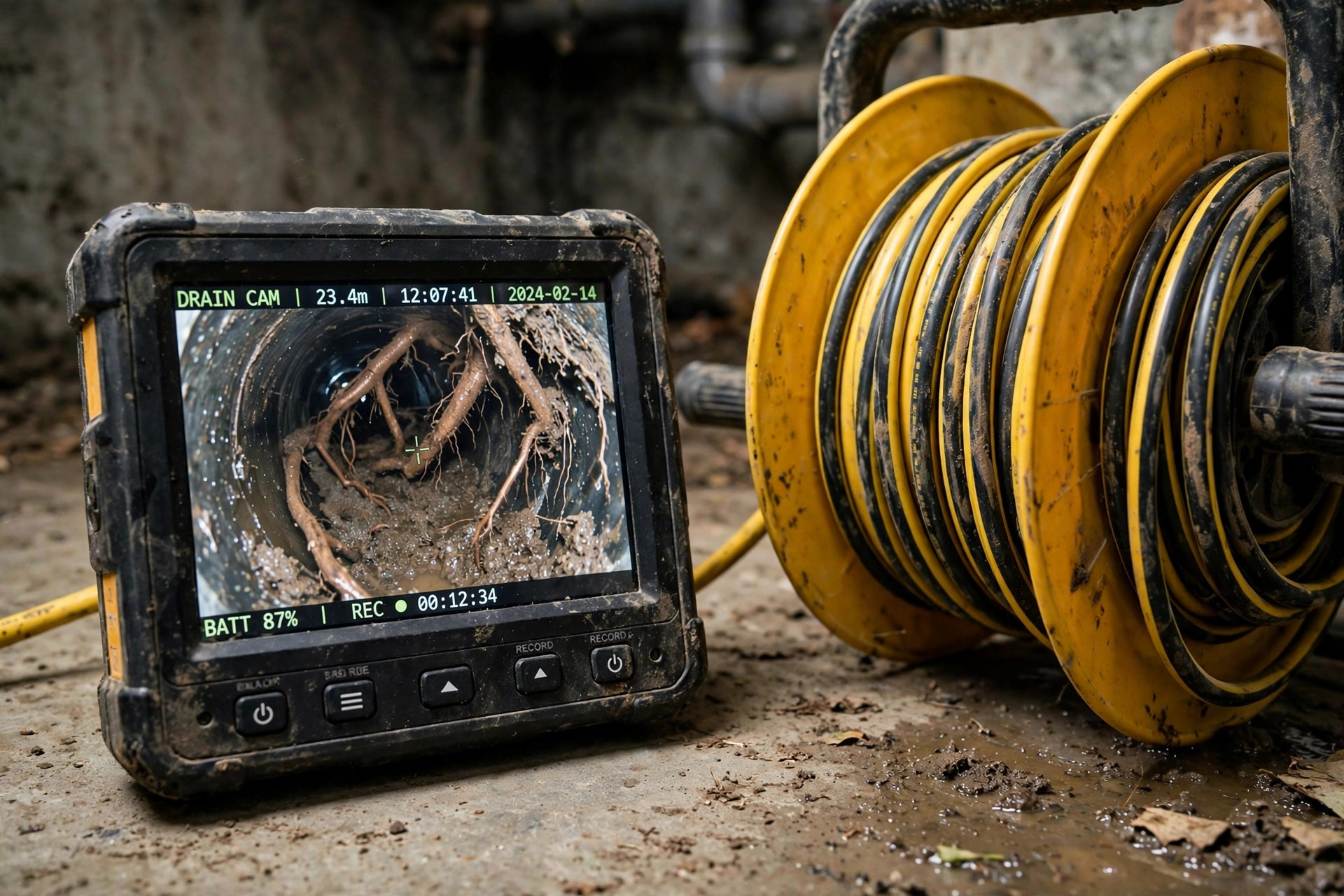
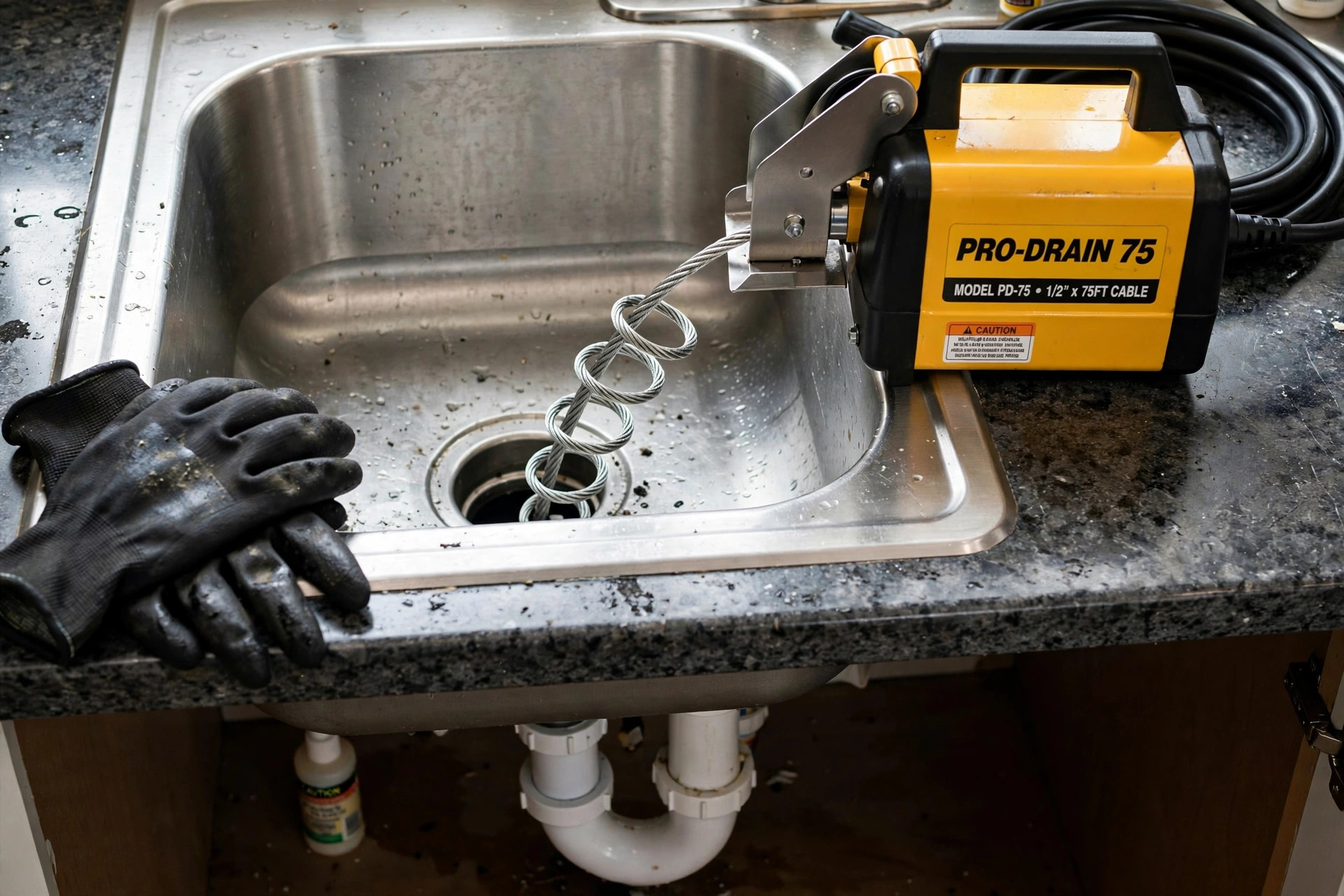
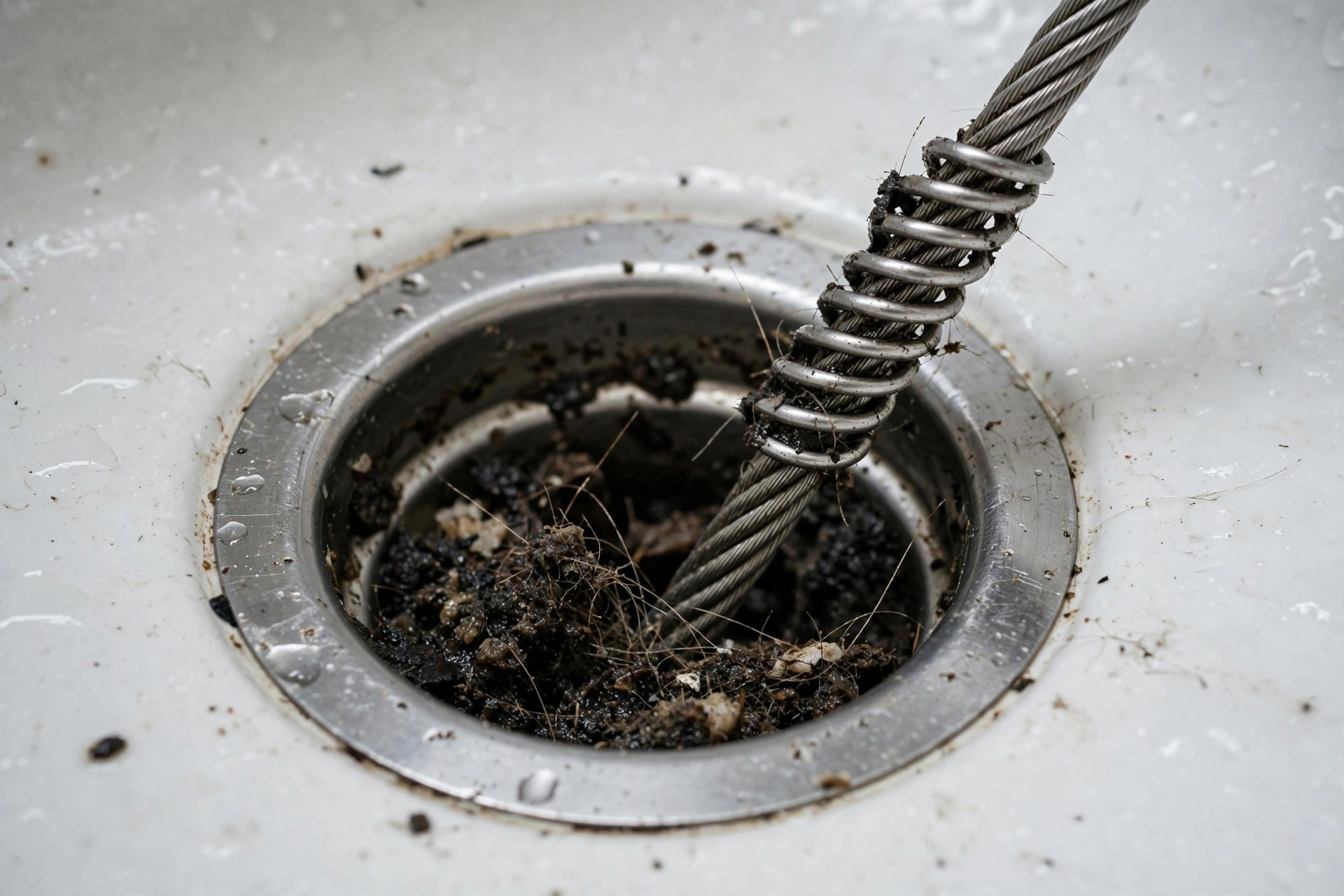
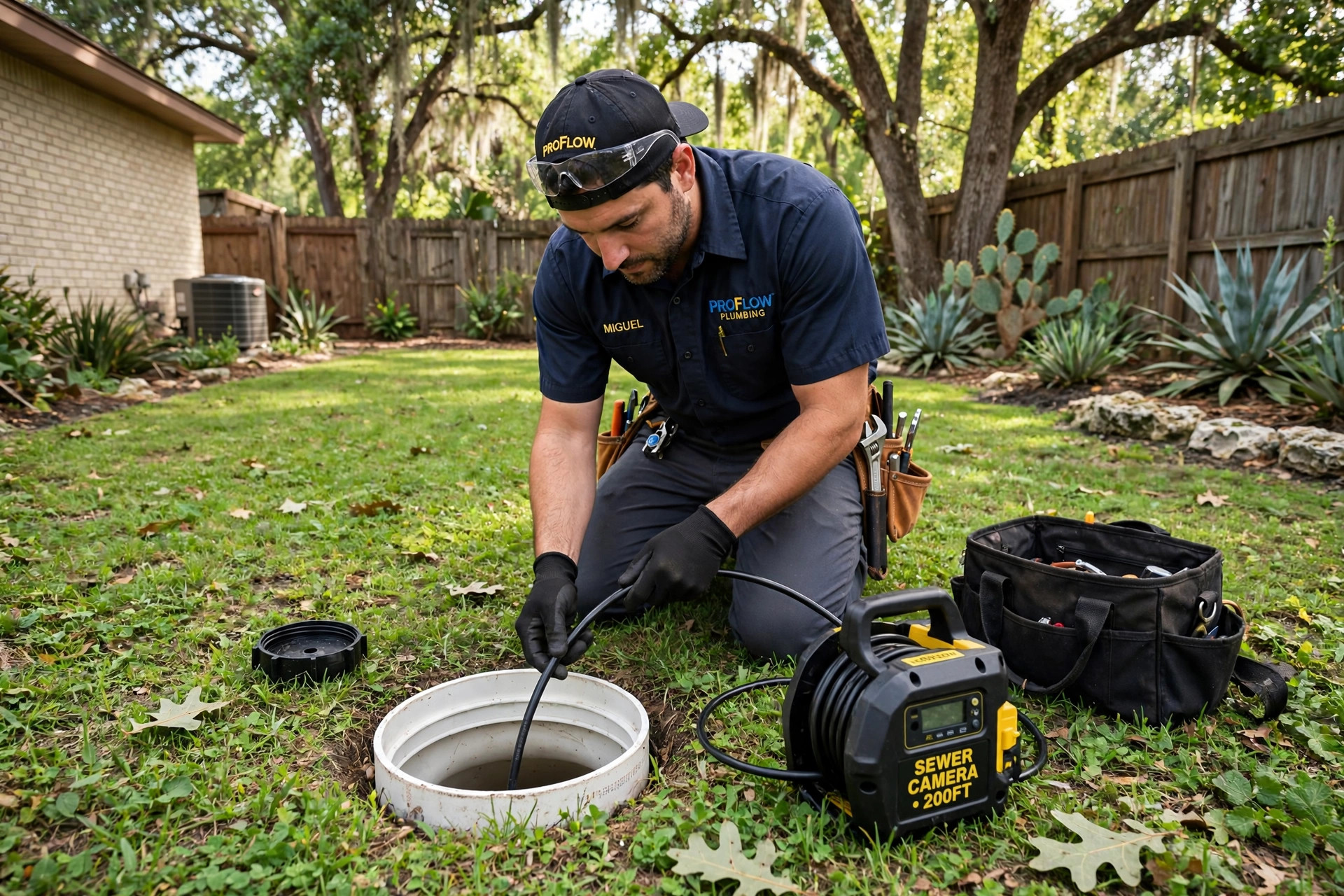
Four methods do most drain cleaning work. A plunger uses pressure to move a soft clog near a fixture, and it works best when the seal is tight and the clog sits close to the drain. A cable snake, also called an auger, feeds a flexible steel cable into the line, breaks through the blockage, and pulls debris back out. It suits single-fixture clogs and short runs. Hydro jetting uses high-pressure water to scour the whole pipe wall, washing grease, scale, and sludge out to the main sewer. A camera inspection is the diagnostic method: a small camera travels the line and shows roots, grease, breaks, and bellies on a screen, so the clearing that follows matches the real problem. A good visit often pairs two methods, such as a camera look before jetting, or a cable clearing followed by a jetting pass on a grease-coated line.
When Cleaning Is Enough and When It Is Not
Cleaning is enough when the pipe itself is sound and the trouble is buildup on the wall. A kitchen line coated in grease, a bathroom line narrowed by soap and hair, or a main line lined with sludge all answer to cleaning. The drain was working before the buildup, and once the wall is clean, full flow returns. Cleaning is not enough when the pipe is damaged. A crack that lets roots in, a belly that holds standing water, or a joint that shifted out of line will keep catching debris no matter how clean the wall is. The sign is a clog that returns in the same spot soon after a thorough cleaning, or several fixtures that slow together. In that case, a camera check shows the damage, and the next step is repair, not another round of cleaning. Knowing the difference saves repeat visits and repeat trouble.
Drain Cleaning in Austin Homes
Austin plumbing gives drain cleaning a local shape. Hard water leaves mineral scale that roughens pipe walls and grabs grease, hair, and soap. Limestone soil swells when wet and shrinks when dry, shifting joints in older clay laterals. Live oak roots follow moisture into those joints and grow into mats that catch paper and waste. Summer downpours can push extra flow through a line that is already narrowed. A technician who knows these patterns checks the right spots first. If your kitchen sink drains slowly, start with our kitchen drain cleaning page. If several fixtures slow at once, the main line may be involved, and our sewer line cleaning page explains the signs. For a clog that keeps coming back, a drain camera inspection shows the cause. We serve 37 Austin ZIP codes, including South Congress 78704. For help, call Drain Cleaning Austin Pros at (737) 248-8499.
What Happens on a Drain Cleaning Visit
A drain cleaning visit follows a steady order, and knowing it helps you judge the work. It starts with your description. Tell the technician which fixtures are slow, when the trouble started, and whether the pattern is one fixture or several. That pattern points to a local clog or a shared line before any tool comes out. Next comes a check of the fixtures. The technician runs water in the slow fixture and in nearby fixtures, listens for gurgling, and watches how water moves. That check narrows the search to one trap, one branch, or the main line. Then comes the clearing. The technician picks the gentlest tool that can do the job, a plunger for a trap clog, a cable for a branch clog, jetting for a coated line, and works until flow returns. A camera look fits in here when the cause is not clear, or when a repeat clog suggests damage. After clearing comes testing. The technician runs water at full volume in the cleared fixture and in nearby fixtures, watching each one drain. A drain that clears but was never tested can hide a partial blockage that returns within days. The visit ends with an explanation. The technician describes what was found, what was cleared, and the one or two habits that keep the line open, such as keeping grease out of the sink or using a strainer in the shower. Ask questions at this point, since the answers are freshest while the technician is still on site. Before the visit, clear the area under the sink and around the affected fixture, so the technician can reach the trap and cleanout without moving stored items. Note any recent work, heavy rain, or repeat clogs in the same spot, since that history can point to roots or a shifted joint. Keep children and pets away from the work area while tools are out. After the visit, watch the cleared fixture for a few days, and note any slow return of the trouble. A drain that slows again within days has a deeper cause, and that pattern is useful when you call back. A good visit leaves you with clear drains, a clear explanation, and a clear sense of what to watch for next.
What Is Drain Cleaning? Cleaning vs Clearing vs Repair FAQs
Common questions on this topic.
What is drain cleaning?
Drain cleaning is the work of opening a slow or blocked drain and restoring full flow. A technician finds the blockage, picks the tool that fits the pipe and the problem, clears the line, and tests nearby fixtures to prove the flow is back.
What is the difference between drain cleaning and drain clearing?
Clearing opens a path through a blockage, usually with a plunger or cable. Cleaning goes further and removes the buildup on the pipe wall, such as grease, scale, and sludge, so the pipe returns to near its full opening.
How long does a drain cleaning visit take?
Most single-fixture clogs clear in under an hour. Main line work and jetting take longer, because the technician inspects the line and tests every fixture before leaving. We confirm the plan on arrival so you know what to expect.
When should I call for drain cleaning?
Call when a drain slows, gurgles, or smells, when a clog comes back, or when several fixtures slow at once. Those signs point to buildup or a deeper line issue. Reach Drain Cleaning Austin Pros at (737) 248-8499 for help.
Related Drain Cleaning Services
Need a hand? These are the jobs we do every day.
More drain cleaning services
Drain acting up right now?
Call for same-day drain cleaning in Austin, Mon-Sat.
Call Us to Book a Visit
Calls are the way to book. Tell us what your drains are doing and we will set up the next open slot.