Drain Flies and Gnats From Drains: Causes and Fixes
Drain flies are small, fuzzy flies that breed in the slimy film inside drains, and they are a sign that the line holds buildup, not that your home is dirty. The adult flies you see around a sink or tub live only a few days, but they lay eggs in the biofilm that coats traps, strainers, and pipe walls. New adults then hatch and gather near the same drain, so the swarm seems to return no matter how many flies you swat. The fix is to remove the breeding site, not to spray the adults. This guide shows how to tell drain flies from other small flies, where they breed, the cleaning steps that remove the film, and when the swarm points to a deeper line problem that needs a check.
How to Tell Drain Flies From Other Small Flies
Drain flies, also called moth flies, look like tiny moths. They have fuzzy wings, a round body, and they hop or fly in short, jerky bursts rather than straight lines. They gather on walls near a drain, and they are weak fliers, so they stay close to the source. Fruit flies, by contrast, have clear wings, red eyes, and they gather around fruit, trash, and food, not drains. Gnats from houseplants hover over soil. The simplest test is the tape test: place a strip of clear tape over the drain overnight, sticky side down, with small gaps at the edges for air. If tiny flies stick to the tape by morning, the drain is the breeding site. If the tape stays clean, look at fruit bowls, trash cans, and plants instead. Knowing the source keeps you from treating the wrong spot.
Where Drain Flies Breed: Biofilm in the Trap and Line
Drain flies lay eggs in biofilm, the thin, slimy layer of soap, grease, hair, and organic matter that coats the inside of a drain. The trap is the main nursery, since it holds water and collects debris. The strainer, the stopper, and the first stretch of pipe below the drain hold film too. Floor drains, guest bathroom drains, and utility sinks that sit unused are common breeding sites, since standing water and slow flow let film build undisturbed. In Austin, warm weather speeds the cycle, and a drain that is used rarely can produce a swarm within weeks. The adults feed on the film and lay eggs in it, so as long as the film stays, new flies keep hatching. Cleaning must reach the film, not just the visible drain opening, or the cycle restarts.
Cleaning Steps That Remove the Breeding Site
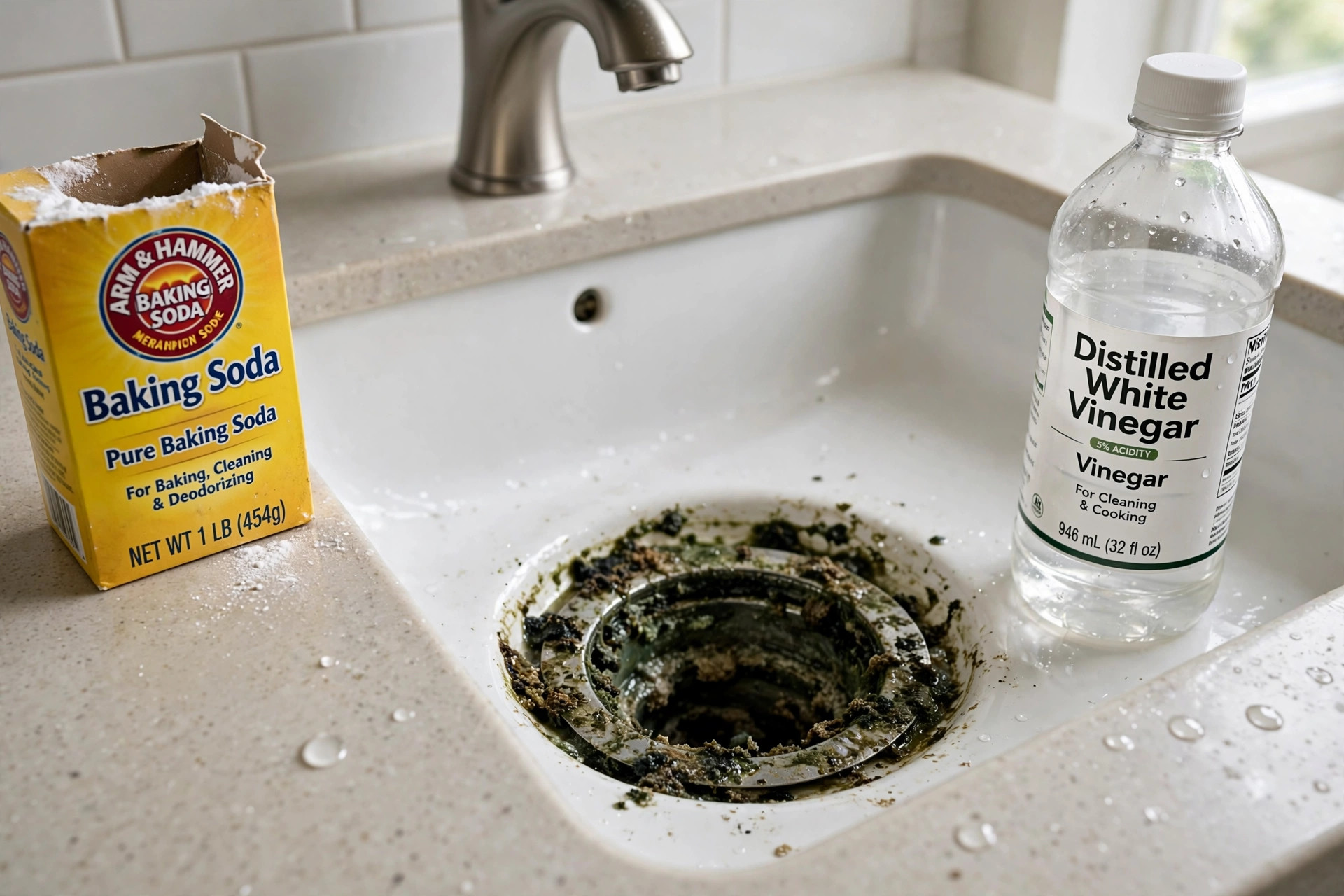
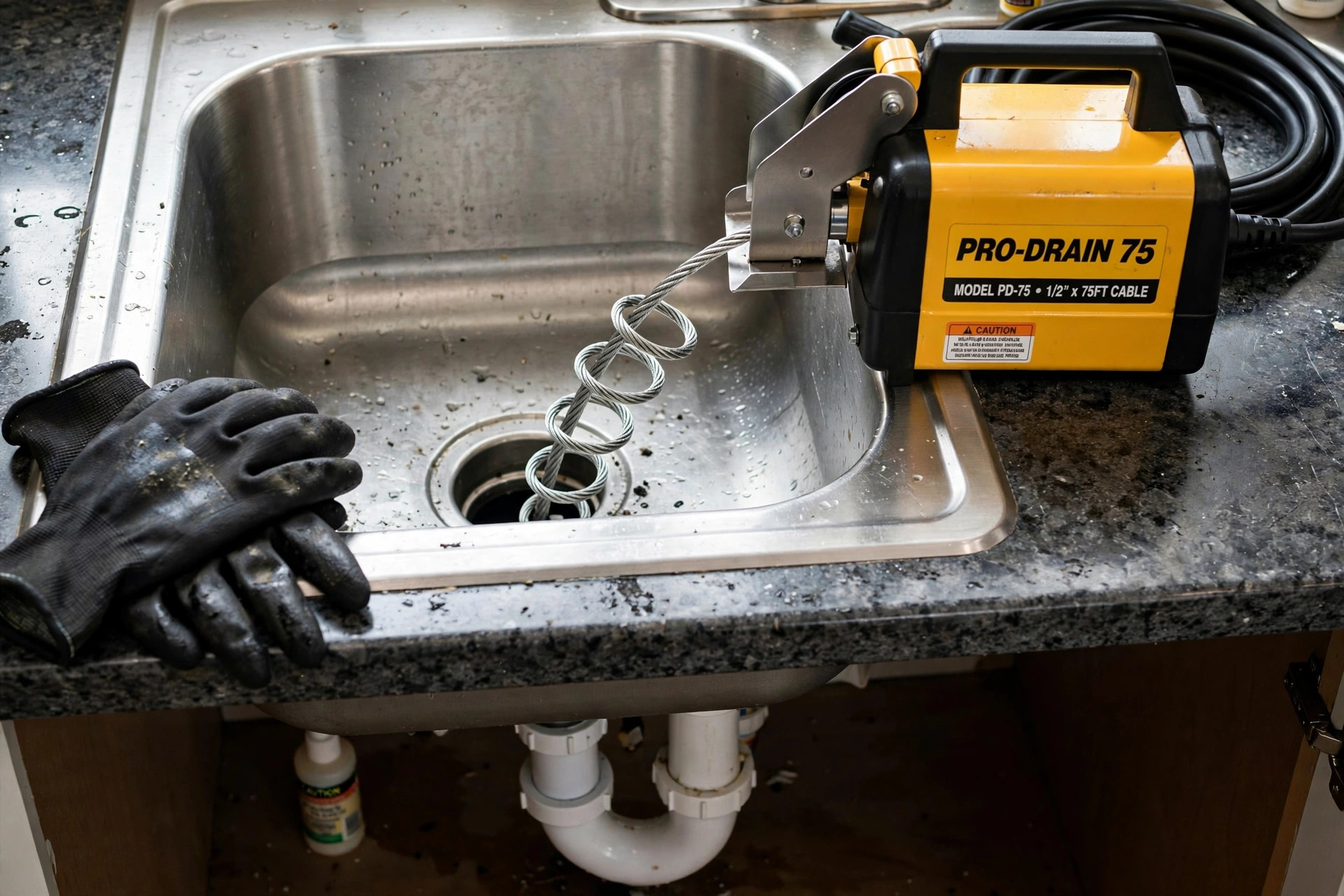
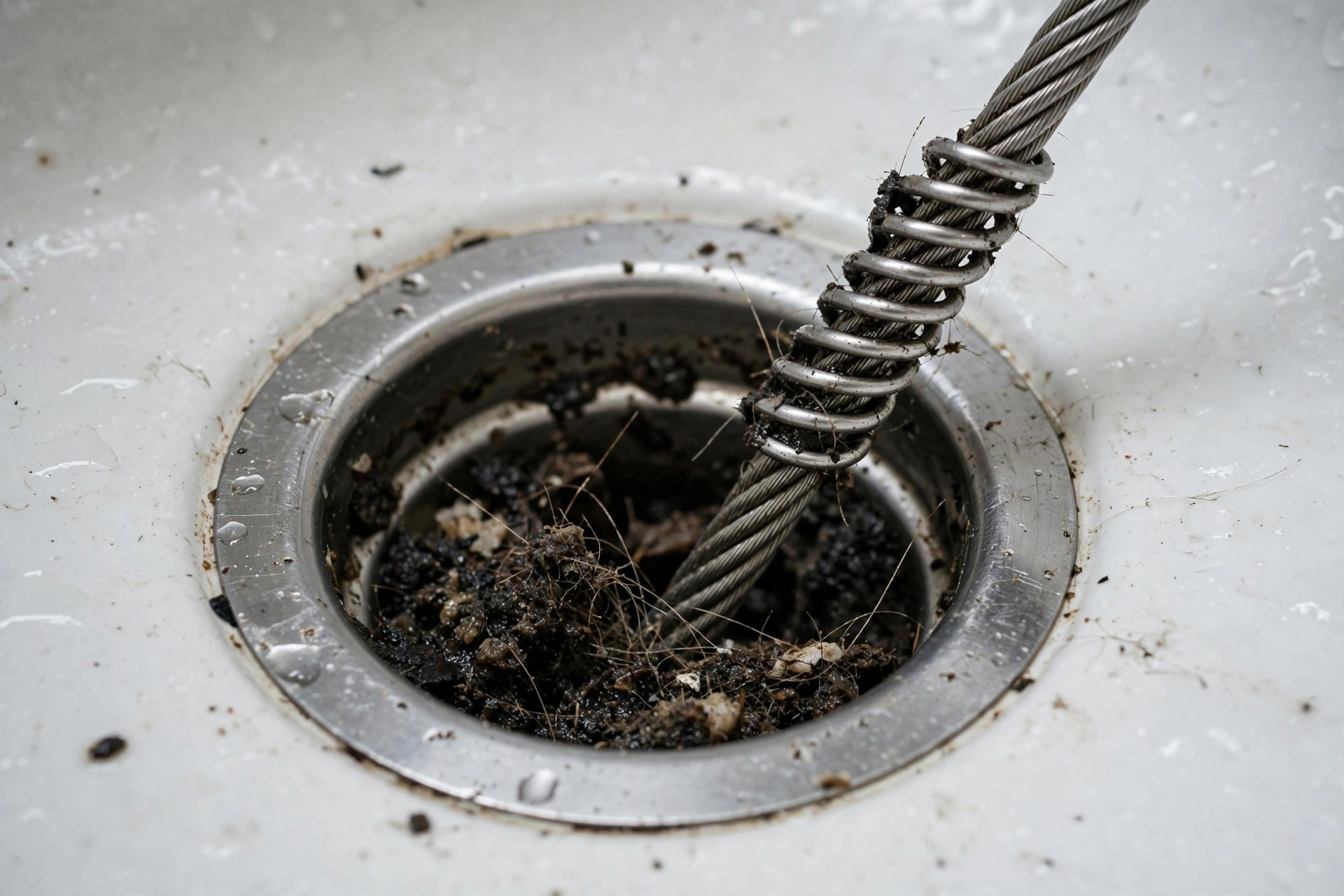
Work through the steps in order, and give each one time to act. Start by removing the strainer and stopper and scrubbing them with a brush and hot, soapy water, since film clings to both. Pull out any hair and debris you can reach with gloved hands. Next, scrub the visible drain opening and the first few inches of pipe with a long, narrow brush, which reaches film that water alone cannot move. Then flush the line with hot tap water for several minutes to carry loosened film away. Repeat the scrub and flush after a day, since eggs and larvae hide in film that one pass can miss. Keep the drain in daily use while you work through the steps, since moving water slows new film. The table below sums up the routine.
Prevention and When to Call
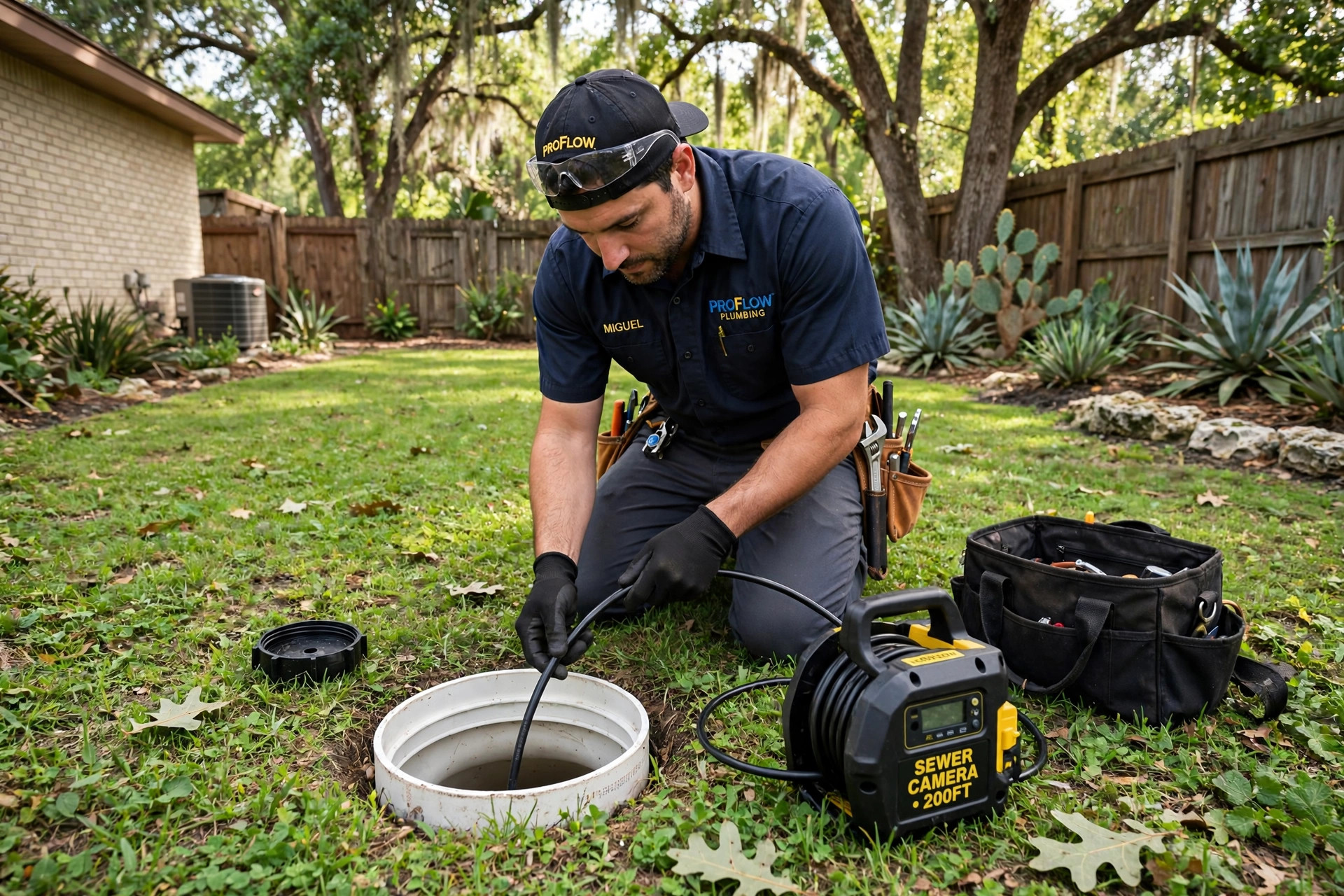
Prevention is the same routine on a lighter schedule. Keep strainers clear, wipe the sink and tub after use, and run water in guest bathrooms and floor drains often enough to keep traps full. Scrape plates before rinsing, and keep grease out of the sink, since grease feeds the film that flies breed in. If the swarm returns after a full scrub and flush, or if it shows up with slow drainage, gurgling, or a sewer smell, the breeding site may sit deeper in the line than a brush can reach. A deeper film, a partial blockage, or a dry trap can all hold a swarm in place. For help, see our bathroom drain cleaning and kitchen drain cleaning pages, or our guide on bad drain smells. We serve 37 Austin ZIP codes, including South Lamar 78745. For a check, call Drain Cleaning Austin Pros at (737) 248-8499.
What Does Not Work on Drain Flies
Several common responses to drain flies waste time because they treat the adults, not the film. Swatting the adults feels productive, yet each adult lives only a few days, and new adults keep hatching from eggs in the film. Bug spray on the adults has the same flaw, and it adds chemicals to a room where you wash and cook. Harsh drain chemicals are a worse idea. They can harm pipes and seals, they can splash back during later service work, and they rarely reach the film that coats the trap and the first stretch of pipe. Boiling water is risky too, since it can damage PVC joints and seals, and it only moves surface film without scrubbing the layer where eggs sit. Pouring vinegar alone does little, since vinegar without scrubbing cannot lift a film that has built up over weeks. Even a strong flush with the tap can fail if the film stays glued to the pipe wall. The only step that ends the cycle is mechanical: scrub the strainer, stopper, drain opening, and reachable pipe, then flush. If a method does not touch the film, it will not end the swarm. When the swarm survives a full scrub and flush, the film sits deeper than a brush can reach, and the line needs a check. A technician can clear the deeper film and look for a partial blockage or a dry trap that holds the swarm in place. Treat the film, not the flies, and the flies leave with it.
Drain Flies and Gnats From Drains: Causes and Fixes FAQs
Common questions on this topic.
What causes drain flies?
Drain flies breed in biofilm, the slimy layer of soap, grease, hair, and organic matter that coats traps, strainers, and pipe walls. Adults lay eggs in the film, and new flies hatch near the same drain.
How do I get rid of drain flies?
Remove the breeding site. Scrub the strainer, stopper, and drain opening with a brush and hot soapy water, flush with hot tap water, and repeat after a day. Keep the drain in daily use so film cannot rebuild.
Do drain flies mean my sewer line is broken?
Not usually. Most swarms come from film in a trap or near line. If the swarm returns after a full cleaning, or shows up with slow drainage, gurgling, or a sewer smell, a deeper line check may be needed.
How long does it take to clear drain flies?
A full scrub and flush often cuts the swarm within days, since adults live only a short time. Repeat the routine after a day to catch eggs and larvae. If flies persist past a week, the film may sit deeper in the line.
Related Drain Cleaning Services
Need a hand? These are the jobs we do every day.
More drain cleaning services
Drain acting up right now?
Call for same-day drain cleaning in Austin, Mon-Sat.
Call Us to Book a Visit
Calls are the way to book. Tell us what your drains are doing and we will set up the next open slot.