Drain Cleaning vs Hydro Jetting: Which One Fits
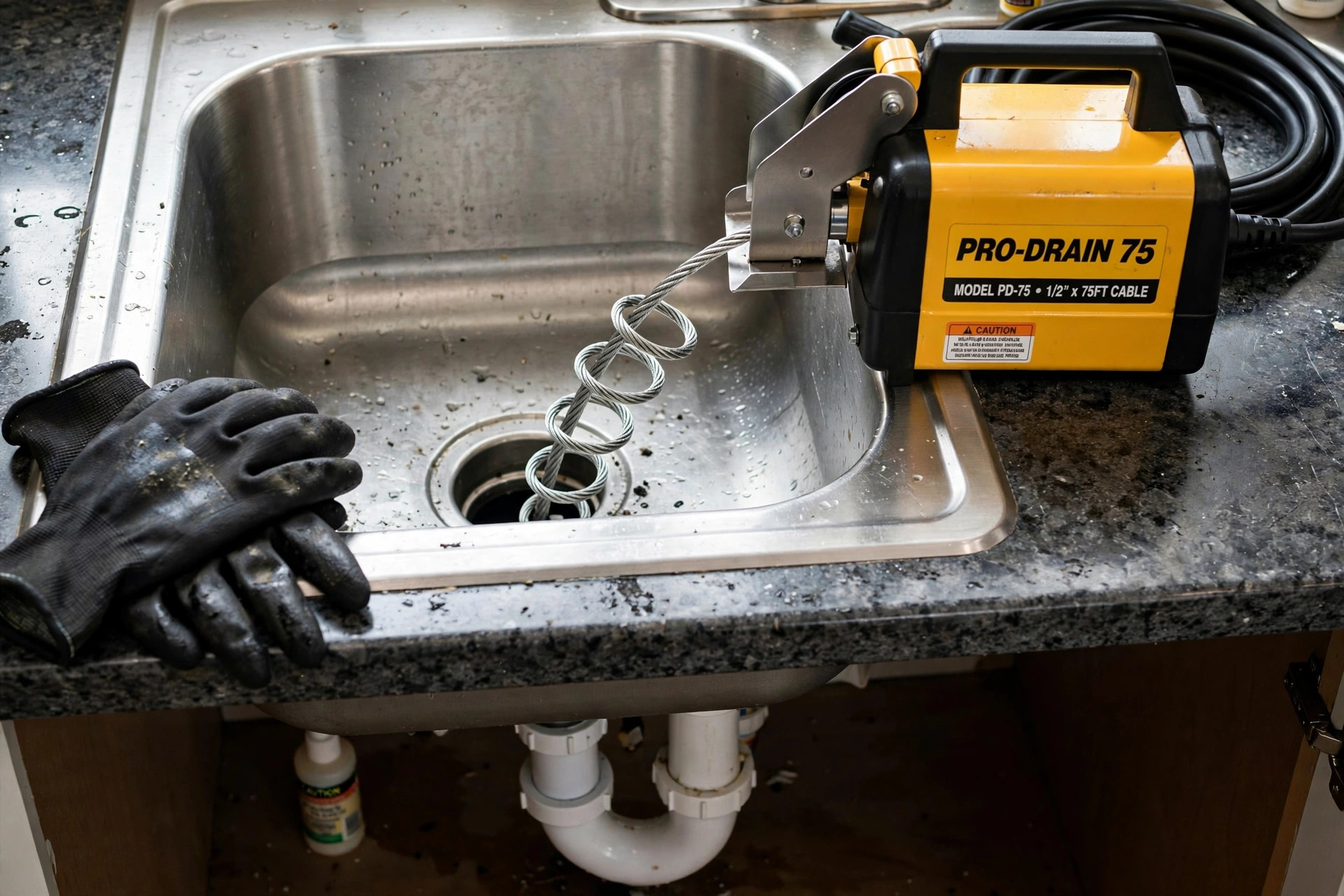
Hydro jetting is a type of drain cleaning, not a rival to it. Drain cleaning is the whole job of opening a slow or blocked drain and restoring flow. Hydro jetting is one method inside that job, a high-pressure water scouring that washes grease, scale, and sludge off the pipe wall. The real choice is usually between methods: snaking, jetting, and camera inspection, and the right pick depends on what is blocking the pipe, how far the buildup runs, and what shape the pipe is in. A cable opens a path through a clog. Jetting cleans the whole pipe wall. A camera shows what is inside before anyone picks a tool. This guide compares the three, explains when each one fits, and why a camera check should come before jetting on a line that may be damaged.
Hydro Jetting Is a Type of Drain Cleaning
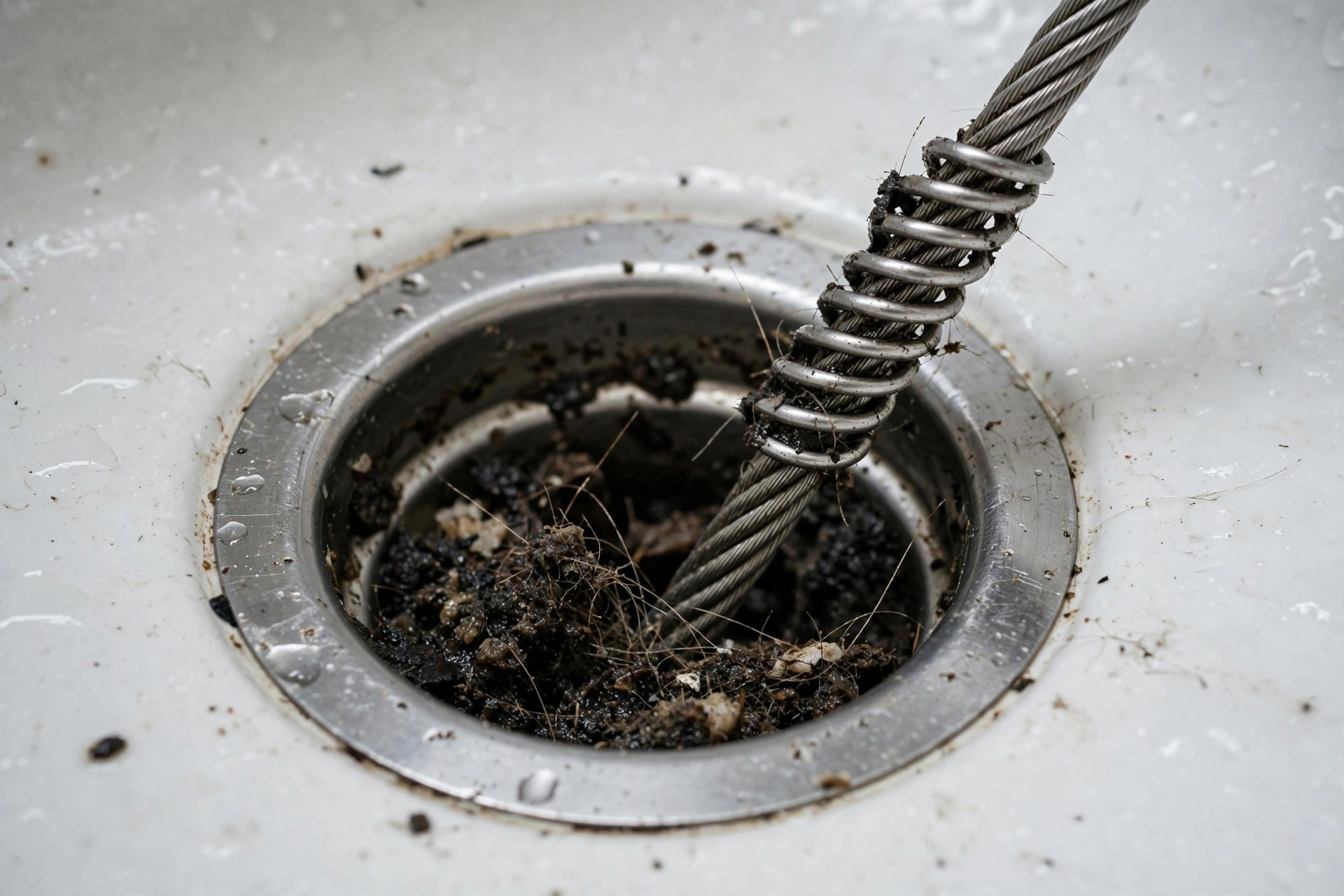
Think of drain cleaning as the trade and hydro jetting as one tool in the van. The trade covers every way to open a drain: plunging, cabling, jetting, and camera-guided work. Jetting is the deep-cleaning tool. A hose with a special nozzle sprays water in several directions at high pressure, cutting grease, soap scum, scale, and sludge off the pipe wall and carrying it downstream to the main sewer. The result is a pipe that is clean around its full circle, not just a hole punched through the clog. That distinction matters for repeat clogs. If a drain was snaked and slowed again within weeks, the pipe wall likely still held residue that caught new debris. Jetting washes that layer away, which is why it often gives a longer lasting clear-out on grease-coated and sludge-lined pipes.
Snaking vs Jetting vs Camera: Side by Side
Each method answers a different question. Snaking asks, can I open a path through this blockage? Jetting asks, can I wash this pipe wall clean? A camera asks, what is actually inside this pipe? A single slow fixture with a soft clog usually needs only a snake. A line that clogs again soon after snaking, a long grease run, or a main line full of sludge usually needs jetting. A repeat clog in the same spot, several fixtures backing up at once, or a line of unknown age and shape needs a camera first. The table below puts the three side by side.
When to Choose Each Method
Choose by the clog, not by the tool. A bathroom sink slowed by hair, a tub with a soap mat, or a toilet with a paper clog usually clears with a cable. A kitchen line that slows again weeks after snaking, a main line lined with sludge, or a pipe wall coated in grease calls for jetting, since only a full-wall wash removes the layer that keeps catching debris. A line that has clogged three times in the same spot, a home with older clay laterals, or any line where the pipe shape is unknown calls for a camera first. The camera answers the question the other two methods cannot: is this pipe sound? If the answer is yes, jetting is safe and thorough. If the camera shows a crack or a break, the next step is repair, and jetting waits.
Pipe Condition Comes First: Camera Before Jetting
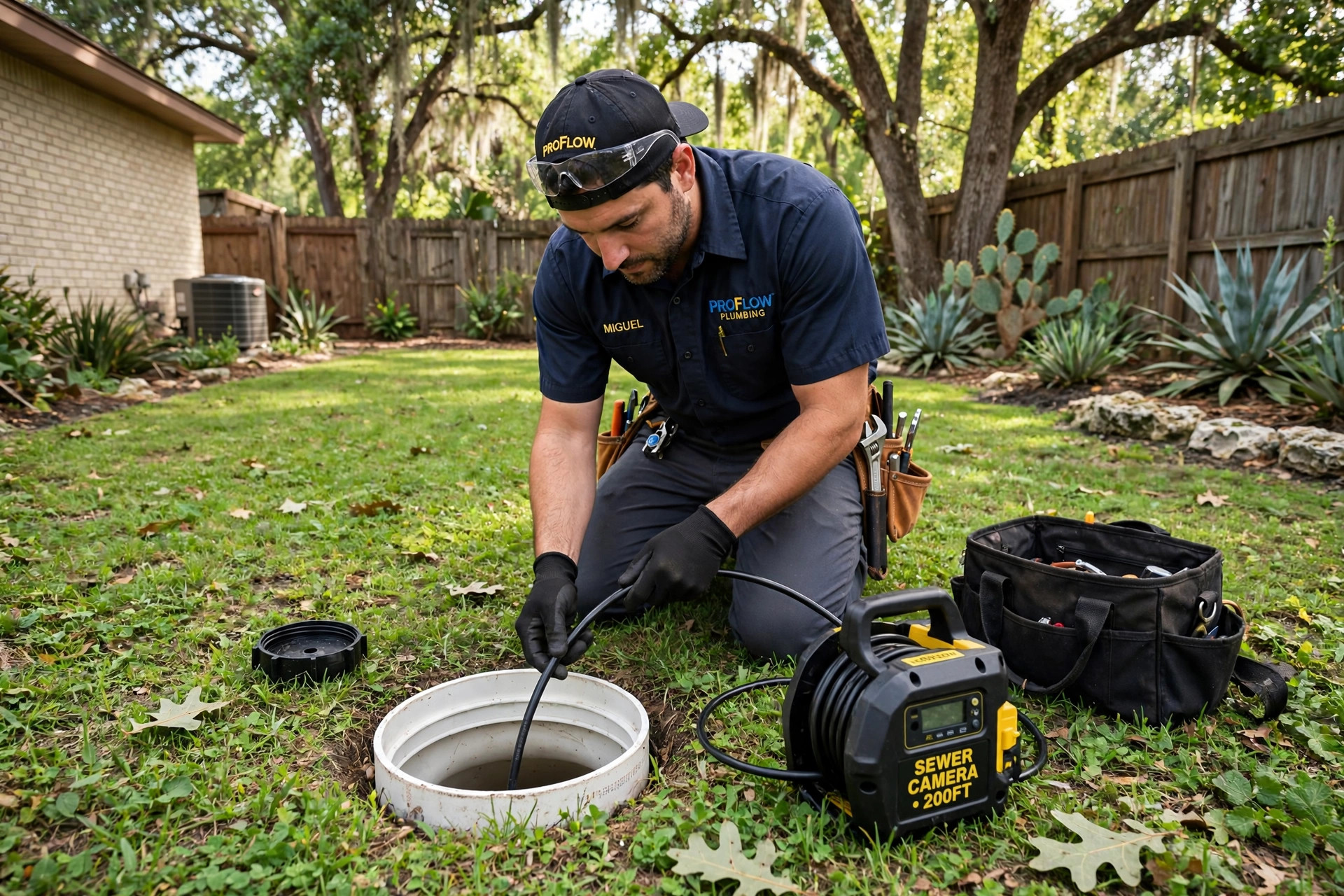
High-pressure water is strong, and strong tools need a sound pipe. A cracked clay joint, a weak cast iron section, or a pipe that has already shifted out of line can be harmed by jetting. That is why a camera check comes first whenever damage is suspected. The camera shows cracks, weak joints, bellies, and breaks, and the technician sets the plan from that picture. In Austin, this step matters more than in many cities. Older clay laterals shift in limestone soil, live oak roots widen joints, and hard water scale hides rough spots. A camera look takes the guesswork out. If your line needs a check, see our drain camera inspection page, and for grease-heavy lines, our hydro jetting page. For general help, start at drain cleaning. We serve 37 Austin ZIP codes, including Arboretum 78759. For help, call Drain Cleaning Austin Pros at (737) 248-8499.
A Worked Example: The Kitchen Line That Kept Slowing
A common Austin story shows how the choice between snaking and jetting plays out. A kitchen sink drains slowly, and a cable clearing opens it. Three weeks later, the sink slows again. Another cable clearing opens it. Three weeks later, it slows a third time. The homeowner has now paid for two clearings that each lasted weeks, and the real trouble is still in the pipe. A camera check on the third visit shows the cause: grease coats the full run of the kitchen line, from the trap to the main. Each snaking punched a hole through the grease, and each hole closed again as new grease caught on the rough, coated wall. The fix is jetting. The technician runs the jet through the line, scouring the wall back to near its full opening and flushing the grease out to the main. The sink drains at full volume, and it stays clear, because the wall no longer holds a layer for new grease to grip. The lesson is not that snaking failed. Snaking did exactly what it is built to do: open a path through a blockage. The lesson is that a repeat clog is a signal, not a routine. When a drain slows again soon after a clearing, the pipe wall is telling you the blockage was never fully removed. A camera check reads that signal, and jetting answers it. If your kitchen line has been cleared twice and still slows, stop repeating the same clearing and ask for a camera look. The picture will show whether the wall is coated, whether roots have entered, or whether the pipe itself is damaged. Each answer leads to a different fix, and the right fix is the one that matches the picture.
Drain Cleaning vs Hydro Jetting: Which One Fits FAQs
Common questions on this topic.
Is hydro jetting a type of drain cleaning?
Yes. Drain cleaning is the whole job of opening a slow or blocked drain. Hydro jetting is one method inside that job, a high-pressure water scouring that washes grease, scale, and sludge off the pipe wall.
Which is better, snaking or hydro jetting?
Neither is better in general. Snaking fits a soft, local clog in one fixture. Jetting fits a wide, sticky clog, such as grease across a long kitchen run or sludge in a main line. A camera check can show which one the line needs.
Is hydro jetting safe for older pipes?
Jetting is safe for most sound pipes, but it is not right for a cracked, weak, or collapsed section. A camera check before jetting shows cracks and weak joints, so the technician can pick a safe next step.
Should I get a camera inspection before jetting?
Yes, when damage is suspected, when the line is old, or when clogs keep coming back in the same spot. The camera shows the pipe shape and confirms the line can handle high-pressure water.
Related Drain Cleaning Services
Need a hand? These are the jobs we do every day.
More drain cleaning services
Drain acting up right now?
Call for same-day drain cleaning in Austin, Mon-Sat.
Call Us to Book a Visit
Calls are the way to book. Tell us what your drains are doing and we will set up the next open slot.