Baking Soda and Vinegar for Drains: Does It Work?
Baking soda and vinegar can help a light, slow drain, but they will not clear a real clog. The mix fizzes when the two meet, and that fizz can loosen a thin film of soap and grease near the drain opening. It cannot dissolve a mat of hair, cut through a grease plug, or move a blockage deeper in the line. Many drains seem to improve after the mix because the hot water flush that follows does most of the work. This guide explains what the fizz actually does, gives safe steps for a light slow drain, lists the limits honestly, and shows when to stop the home remedy and call for a check. No product endorsement is needed here: baking soda and vinegar are plain household items, and their limits matter more than their fizz.
What Baking Soda and Vinegar Can and Cannot Do
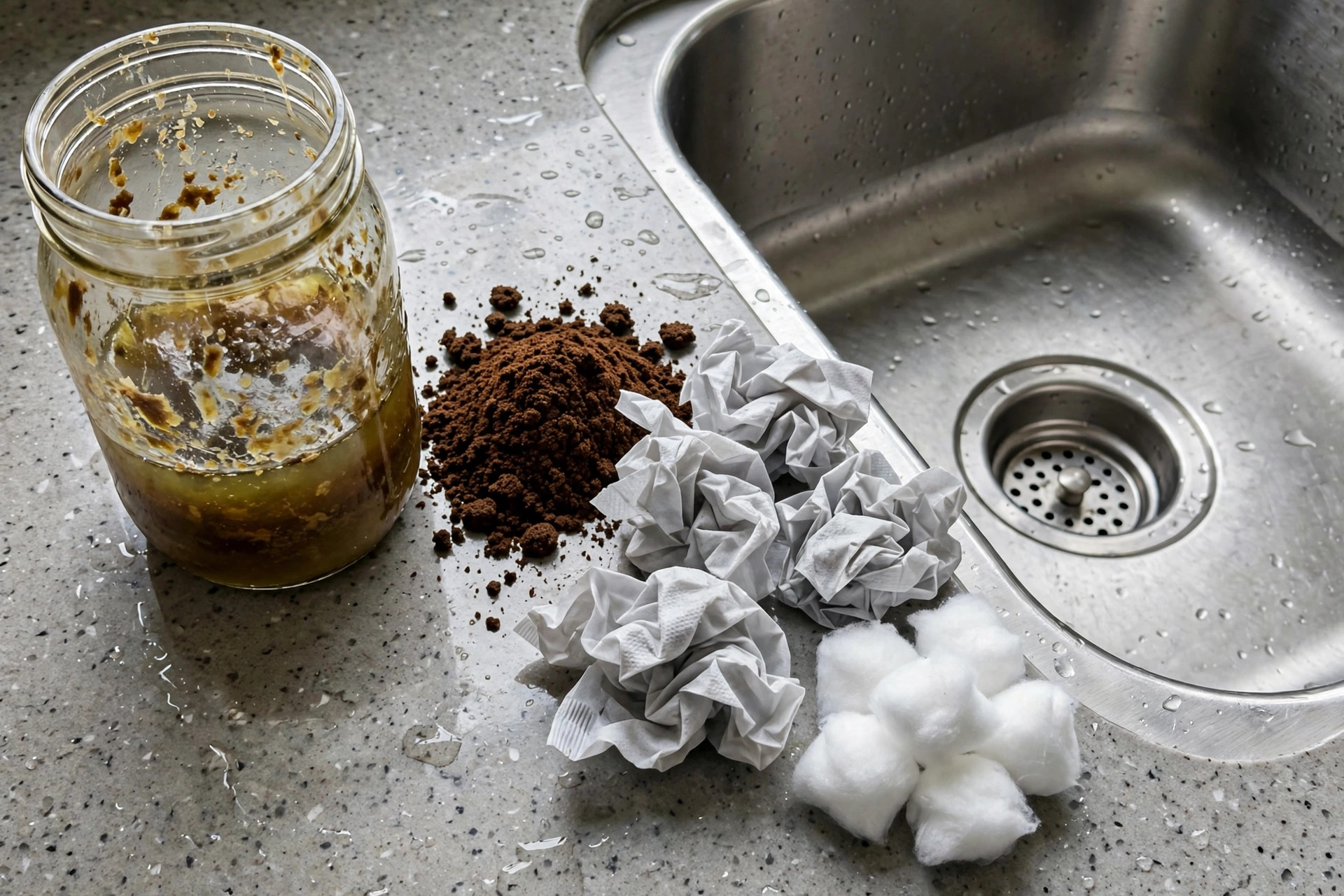
Baking soda is a mild base and vinegar is a mild acid. When they meet, they react and release carbon dioxide gas, which is the fizz you see. That fizz can agitate loose film and lift light soap residue near the drain opening, which is why a sink that was only a little slow may drain a bit faster after the mix. The reaction ends quickly, though, and the leftover liquid is mostly water with a small amount of salt. It has no power to dissolve hair, which is the main cause of bathroom clogs. It cannot cut a grease plug that has hardened on the pipe wall, and it cannot reach a blockage that sits past the trap. A drain that is fully blocked, backing up, or slow across several fixtures needs a mechanical clearing, not a kitchen mix.
Safe Steps for a Light, Slow Drain
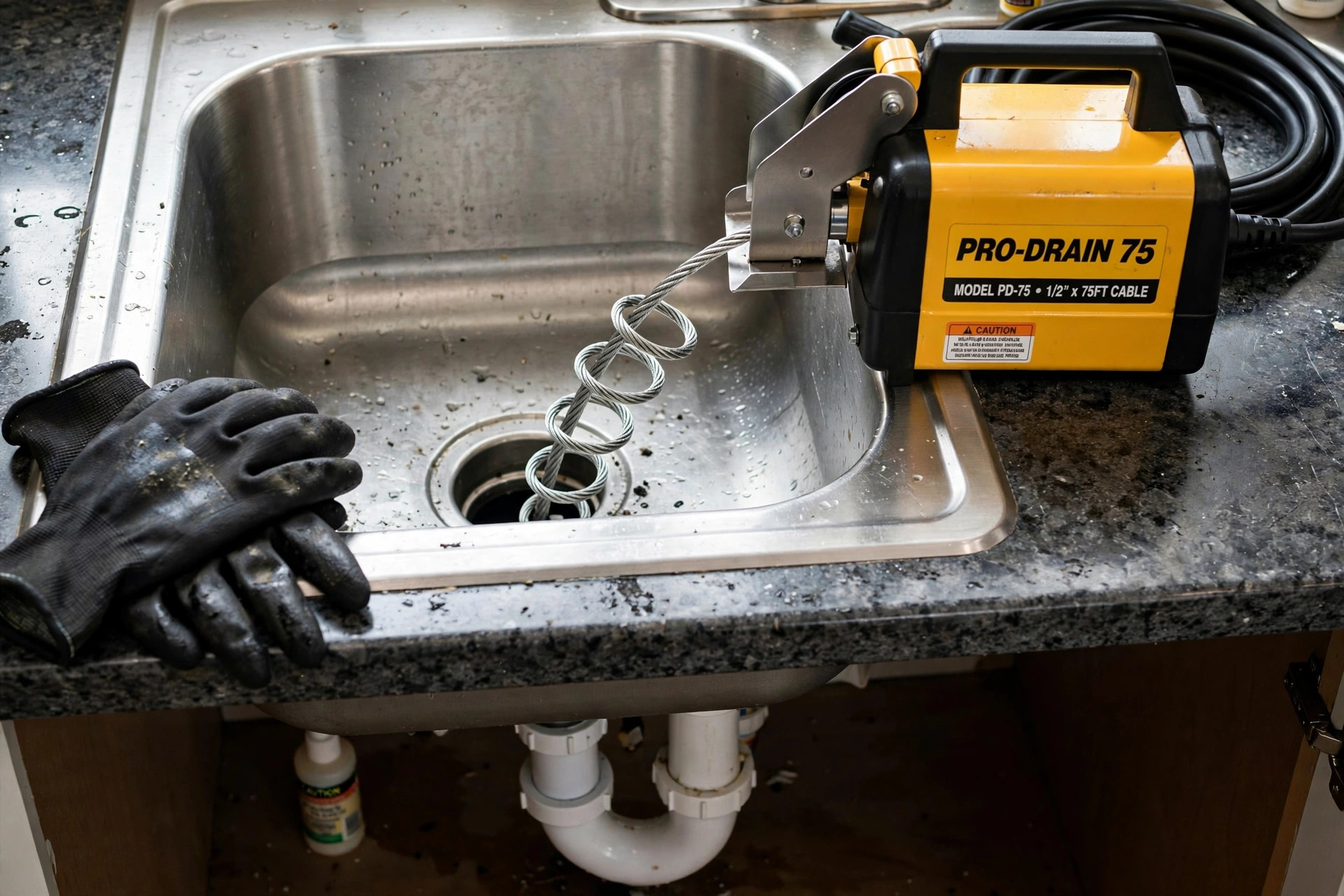
Use the mix only on a drain that is slow, not blocked, and only when no harsh chemicals have been poured into the line. First, clear the strainer and stopper and pull out any hair or debris you can reach with gloved hands. Pour half a cup of baking soda into the drain, then pour one cup of vinegar after it. Let the mix sit for 15 minutes while it fizzes. Then flush with hot tap water, not boiling water, for two to three minutes. Hot tap water carries loosened film away without risking PVC joints and seals. Test the flow. If the drain is still slow, the blockage sits deeper than the mix can reach. Do not repeat the mix again and again, since each round adds little and the real blockage keeps growing while you wait.
Method vs Reality
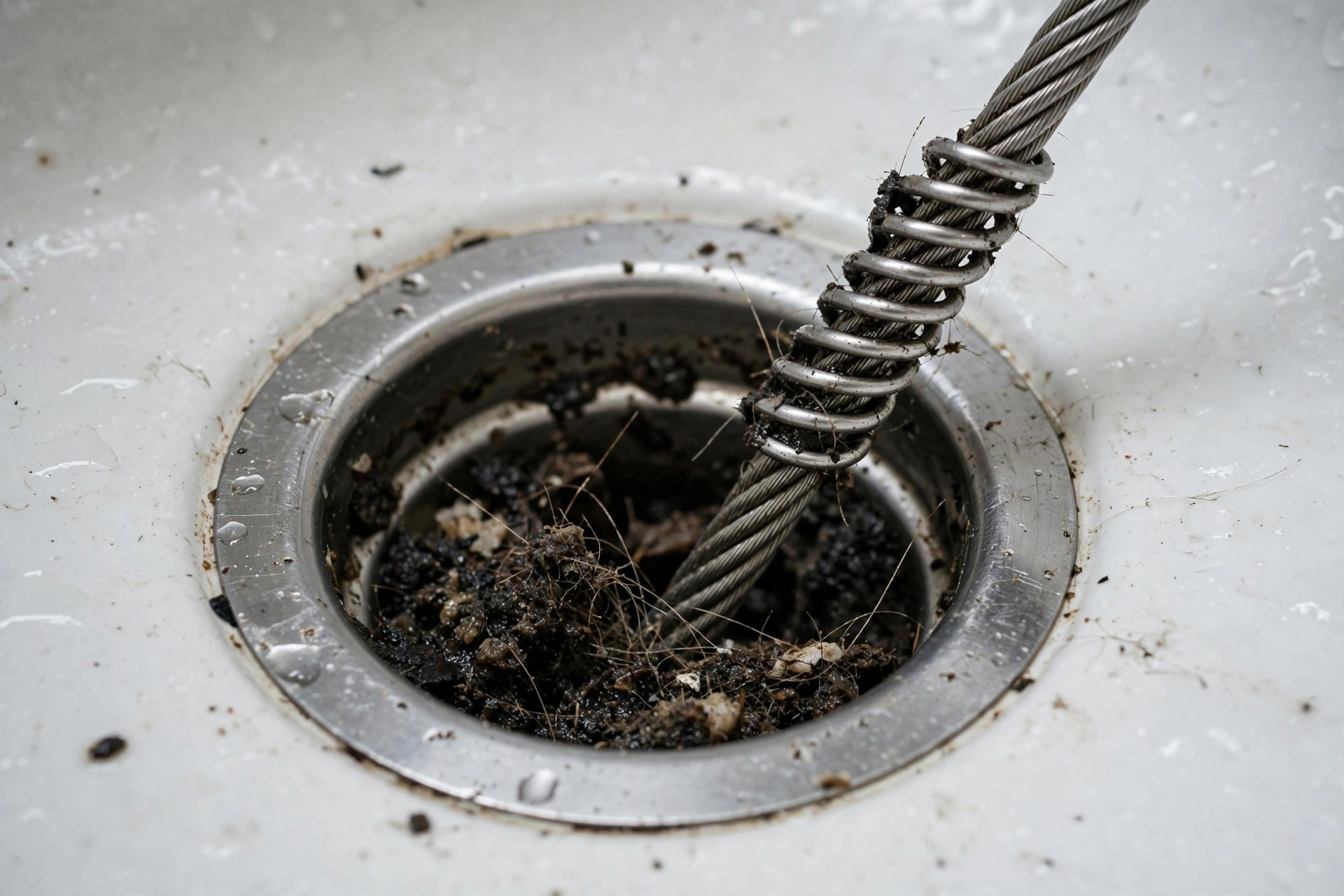
The table below puts common claims about the mix next to what actually happens. The pattern is steady: the mix helps light surface film and little else. A plunger, a trap clean, or a cable reaches the blockages the mix cannot.
When to Stop DIY and Call
Stop the home remedy and call when the drain stays slow after one try, when water backs up, when several fixtures slow at once, or when you smell sewer gas. Those signs point to a blockage the mix cannot reach, and waiting lets it grow. Also stop if you have already poured harsh chemicals into the line, since mixing household items with those chemicals can be unsafe, and the line needs a tech to handle it. A technician can tell you plainly what the blockage is and clear it with the right tool. For help, see our what not to pour down drains guide, our kitchen drain cleaning page, and our bathroom drain cleaning page. We serve 37 Austin ZIP codes, including Northwest Hills 78731. For a check, call Drain Cleaning Austin Pros at (737) 248-8499.
Why the Fizz Fools Us
The fizz looks powerful, and that is why the mix has such a loyal following. A foaming drain feels like a working drain. The sound, the bubbles, and the smell of vinegar all suggest that something strong is happening inside the pipe. In truth, the fizz is a small reaction that ends in seconds, and the leftover liquid is mostly water. The real work in most baking soda and vinegar routines comes from the steps around the mix: clearing the strainer, pulling out hair, and flushing with hot water for several minutes. Those steps alone would have helped the drain even without the fizz. The mix gets the credit because it is the most dramatic part of the routine. The test of a real fix is simple. Run water at full volume for a minute after the routine and watch the drain. If it swirls down fast and stays fast for days, the drain is truly clearer. If it slows again within a day, the mix only moved surface film near the opening, and the blockage deeper in the line is untouched. A drain that needs the mix every week has a blockage that keeps growing, and each week of waiting lets it grow further. The honest role of baking soda and vinegar is narrow: a light touch-up for a drain that is only a little slow, used once, followed by a hot tap water flush. Anything beyond that is delay, not treatment. Remember that the mix cannot tell you where a blockage sits. It cannot tell a trap clog from a branch clog, and it cannot show roots, breaks, or bellies. Only a look inside the line, or a clearing that tests the flow, gives that answer. When the drain stays slow after one try, put the box and bottle away and clear the line properly.
Baking Soda and Vinegar for Drains: Does It Work? FAQs
Common questions on this topic.
Does baking soda and vinegar unclog drains?
It can loosen a thin film of soap near the opening, but it will not clear a real clog. Hair mats, grease plugs, and deeper blockages need a mechanical clearing, such as a plunger, a cable, or a visit from a tech.
Can baking soda and vinegar damage pipes?
The mix itself is gentle on pipes. The risk comes from using boiling water with it, which can harm PVC joints and seals, or from mixing it with harsh chemicals already in the line. Use hot tap water, not boiling water.
What should I use instead of baking soda and vinegar?
For a slow drain, start by clearing the strainer and stopper, pulling out hair you can reach, and using a plunger. If the drain stays slow, a cable clearing or a tech visit reaches the blockage the mix cannot.
How often can I use baking soda and vinegar in drains?
There is no need to use it on a schedule. A drain that needs the mix often has a blockage that keeps growing. If you find yourself repeating the mix, call for a check instead.
Related Drain Cleaning Services
Need a hand? These are the jobs we do every day.
More drain cleaning services
Drain acting up right now?
Call for same-day drain cleaning in Austin, Mon-Sat.
Call Us to Book a Visit
Calls are the way to book. Tell us what your drains are doing and we will set up the next open slot.